Tuesday, June 16, 2026
Home Blog Page 566

The Psilocybin Movement Is Like The Cannabis Movement (Except When It’s Not)

0

A race is underway to explore the attributes of psychedelic mushrooms and to leverage their promise in commercial applications.

There is a bona fide movement underway with psilocybin. Decriminalization occurred last year in Denver, Oakland and Santa Cruz, and that was just a start: nearly 100 other cities are looking at decriminalizing psychedelics. At the state level, ballot measures are out for signature in California and Oregon. Federally, legislation has been proposed to allow research into psychedelic drugs, alongside calls for decriminalization.

On the commercial side, well-funded private companies (for- and non-profit) are pushing ahead with Food and Drug Administration (FDA) psilocybin studies, patent acquisition, and registration of other intellectual property. Many of these private companies are set to go public. Others are public already. All in all, a race is underway to explore the attributes of psychedelic mushrooms and to leverage their promise in commercial applications.

Because psilocybin and other entheogens are Schedule I drugs in the United States (and strictly controlled under international law), the comparison is often made between what is happening with psilocybin and what happened with marijuana over the past few decades. It’s not a terrible comparison, but it’s not perfect either. Below is a high-level survey of psilocybin, contrasting the lay of the land with historical cannabis progress.

Like cannabis, psilocybin will advance on two tracks

On the first track, psilocybin is moving ahead via initiatives and initiated ordinances, just like marijuana from 1996 to the present. The scope of the psilocybin initiatives is similar to the early marijuana ballot measures in that they focus primarily on decriminalization. These initiatives do not contemplate a commercial model and it seems unlikely that they will be lucrative. They certainly do not yet resemble the second wave of “retail model” programs that became standard with medical and adult use cannabis. Mushrooms and cannabis are very different in nature.

RELATED: This Psilocybin Patent Could Be A Really Big Deal

The second track for psilocybin is the pharmaceutical model. We also saw this with cannabis, first with synthetic drugs and then with Epidiolex, the first non-synthetic cannabis drug to win FDA approval. With psilocybin, this second track is moving faster. The FDA already has granted “breakthrough therapy” status to a pair of psilocybin applicants for depression-related formulas, after approving another antidepressant designed to mimic hallucinogenic ketamine last year.
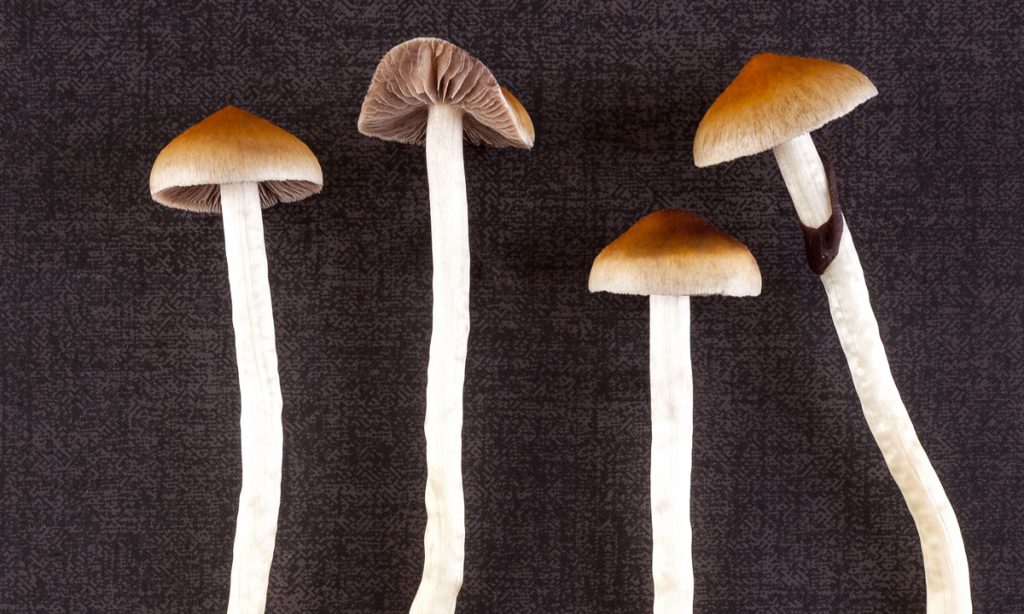
oregon is seriously considering legalizing psilocybin mushrooms
Photo by eskymaks/Getty Images

On those tracks, psilocybin will advance slower (and faster) than cannabis

Psilocybin will continue to be decriminalized around the United States in 2020 and beyond. But that is not the same thing as broad legalization. The closest we may get to “legalization” will be in proposals such as Oregon’s Measure 34, which goes beyond mere decriminalization to create a state-sanctioned “patient and caregiver” framework. This type of proposal envisions psilocybin-assisted therapy in controlled environments. It rules out the retail model entirely.

RELATED: The Medical Benefits Of Taking Psilocybin ‘Magic’ Mushrooms

On the pharmaceutical side, the FDA’s willingness to grant breakthrough therapy status to psychedelic drugs, as mentioned above, has put psilocybin approvals in an expeditious place. Research companies, along with FDA, are seemingly “all in” on psilocybin’s potential in battling treatment-resistant depression. The funding and sophistication required are definitely there.

This targeted pharmaceutical approach will serve psilocybin promoters well, as contrasted with cannabis, which has been touted broadly and amorphously for every use from chronic pain to Alzheimer’s disease. Expect psilocybin to move more quickly than cannabis on the pharma track. Concurrently, expect the groundswell of broader “legalization” efforts to continue, even if we never see psychedelics sold at retail.
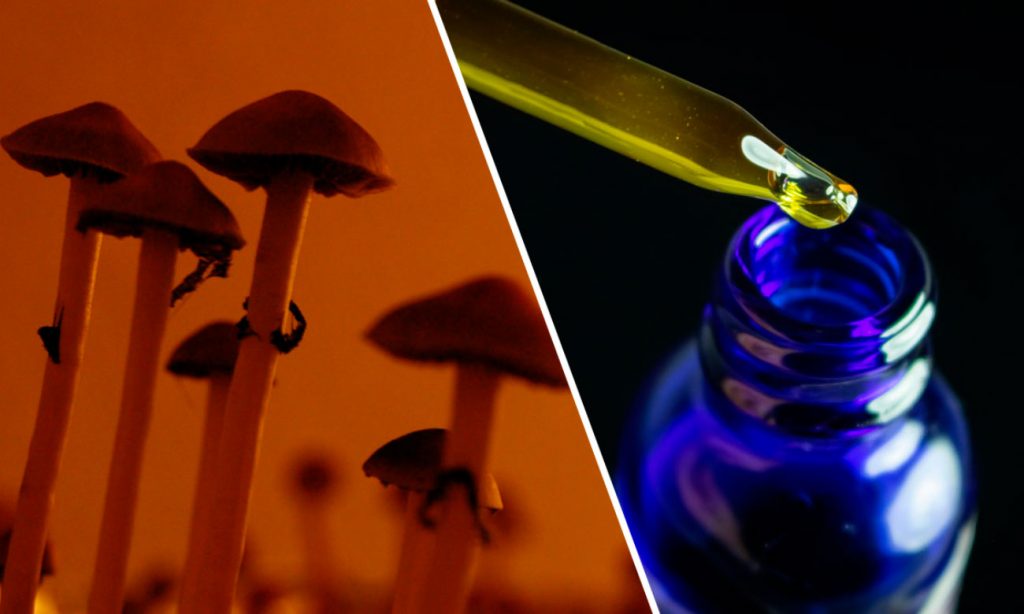
both cbd and psilocybin show potential in fighting alcohol use disorder
Photos by: Flickr user afgooey74, HighGradeRoots/Getty Images
Cannabis legalization helped pave the way for psilocybin

Any legal right of adults to decide what to put into their own bodies must be re-litigated with every controlled substance. That was true 100 years ago with alcohol, it’s true with cannabis, and it’s going to be true with psychedelics going forward. Much of this litigation happens in the court of public opinion. People begin to believe that prohibition is useless, that incarcerating people for using drugs is wrong and that new rules are needed. This is how we ended up with laws from the 21st Amendment to the U.S. Constitution (1933), to California’s Proposition 215 (1996) to Oregon’s proposed Measure 34 (2020).

RELATED: Are Magic Mushrooms The Next Frontier For The Cannabis Industry?

For at least several years, most Americans have supported the medical use of psychedelic drugs. As I previously discussed in a close reading of Oregon’s proposed Measure 34, the “legalization” model is similar to the trail blazed by locally cannabis. When enough cities and states move along the continuum from prohibition to decriminalization and beyond, the legal status quo becomes untenable. People will push this hard; people will try things. At some point, federal policy finally evolves and change becomes inevitable. All of that should happen this decade with psilocybin.

Vince Sliwoski is an attorney at Harris Bricken and this article was originally published on the Canna Law Blog.
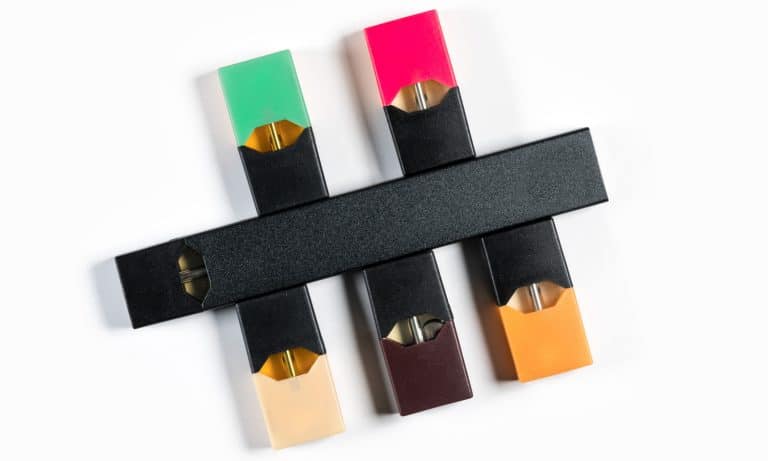
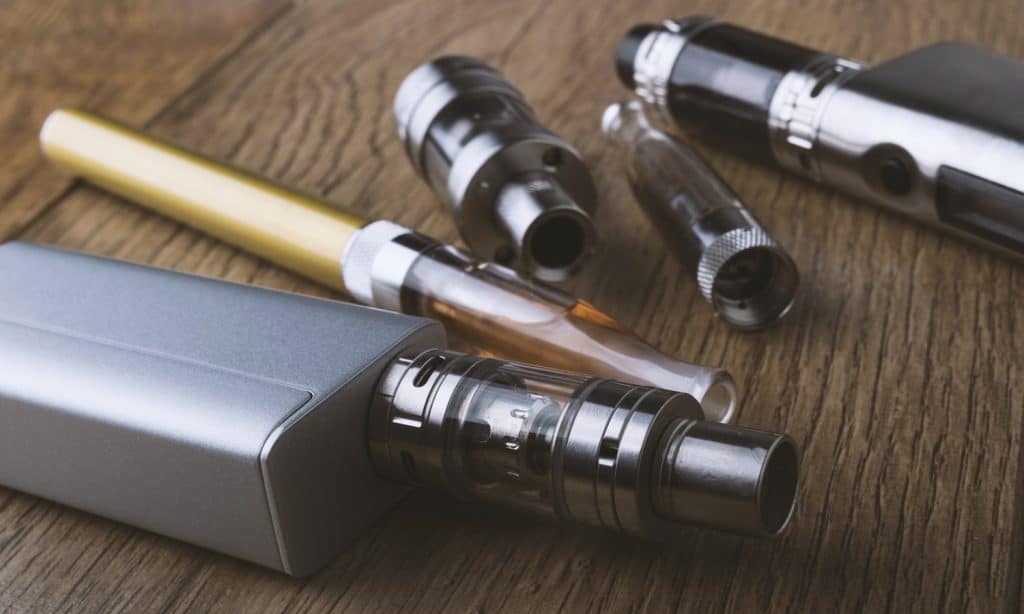
How Safe Do Consumers Really Feel After Recent Vaping Illness?

0

While the majority of consumers report feeling “safe” using vaping products, Google searches for “quit vaping” dramatically spiked at height of EVALI outbreak.

Though new cases continue to be reported, the outbreak of E-cigarette or Vaping product use Associated Lung Injury (EVALI) has steadily declined since initial reports surfaced last July. As of February 4, the Centers for Disease Control and Prevention (CDC) reports there have been 2,758 hospitalized cases of EVALI resulting in 64 deaths. Cases were found in all 50 states, but its spread peaked in September of last year.

While EVALI has primarily been linked to THC vaping products with dangerous additives purchased on the black market, the outbreak caused worried e-cigarette users to ask Google how they can “quit vaping.” According to researchers, the potential of illness caused vaping users to question their habit. Monitoring Google Trends data, scientists determined that search terms like “quit vaping” increased 3.7-fold during the peak of the EVALI outbreak.

RELATED: As Teen Use Rises, Study Finds Vaping Damages Lungs

“Then these searches then died down, so the timing of the outbreak was strongly associated with searches on how to get off of these products,” said Sara Kalkhoran, an assistant professor at Harvard Medical School and the lead author of the study.

What Does Instagram's Ban On Vaping Influencers Mean For Cannabis?
Photo by HAZEMMKAMAL/Getty Images

RELATED: We Now Know What Likely Caused The Vaping Illness Outbreak

Kalkhoran, who specializes an investigator at MGH’s Tobacco Research and Treatment Center, believes her team’s study, published in the Journal of General Internal Medicine, shows the need for stronger public health messaging on happing. Vaping users should understand the consequences, she added, “before something like this happens.”

Despite the brief scare, the majority of vapers feel relatively “safe” using e-cigarette products despite recognizing the habit as unhealthy. In a different study conducted by health data management firm Harmony Healthcare IT, researchers surveyed 1,800 Americans between the ages 18-38. Respondents most commonly said they started vaping to quit smoking cigarettes, and 77% said vaping is healthier than smoking cigarettes, with 39% labeling vaping as healthier than smoking marijuana.

RELATED: New Study Provides Clues Behind The Vaping Illness Outbreak

Though 71% believed vaping was unhealthy, 79% still said they felt safe using vaping products. According to the survey, only 56% said they considered quitting due to EVALI with 36% admitting they would still vape even if they knew someone who developed an illness from vaping. Most of those surveyed stated they did not know the total number of people who became sick with EVALI from vaping.

Marijuana Users With ADHD Use Less Prescription Drugs

A recent study found that marijuana can reduce the symptoms of ADHD and the amount of prescription medication ingested.

A new study says that when people with ADHD take the right kind of medical marijuana, they tend to use less prescription medication.

The study, published in the Rambam Maimonides Medical Journal, collected data from 53 medical cannabis patients from Israel who were diagnosed with ADHD. Thirty-seven of these patients also suffered from some other mental health condition.

Participants of the study were tasked with filling out different surveys and self reporting on their monthly doses of cannabis, how they were consumed, and the cultivar name of the cannabis product. Israel currently grants more access to medical marijuana patients than many other places in the world, providing them with more varied cultivars and opportunities. The study collected data from subjects from October 2019 to January 2020.

RELATED: Why I Use Cannabis To Help Treat My Adult ADHD

how cbd helped control this teenagers adhd and tourettes syndrome
Photo by Larry Washburn/Getty Images

One of the factors that makes this study the first of its kind is the fact that researchers asked participants to list out the cultivars that they were consuming, allowing them to learn which cannabis compounds produce better effects for people with ADHD. While the interactions between the different cannabinoids and terpenes remains unclear, the study did find that patients who consumed cultivars with large amounts of cannabinol (CBN) has the best results.

“The aim of this cross-sectional questionnaire-based study was to identify associations between the doses of cannabinoids and terpenes administered, and symptoms of attention deficit hyperactivity disorder (ADHD),” explains the study.

RELATED: Can CBD Be Used To Treat ADHD Symptoms?

Following CBN, other cannabinoids that produced effective results for people with ADHD include THC, THCV and CBD.

In the study’s conclusion, the writers explain that although more studies are necessary to understand how cannabis impacts ADHD, consuming higher doses of the drug improved the symptoms of patients and made them reduce their medication use.

[h/t Marijuana Moment]

Will The NFL Quietly Decriminalize Marijuana Under New Players Union Contract?

0

The NFL proposed shrinking the drug testing window from four months to two weeks, as well as dramatically reducing penalties for positive tests.

The National Football League maintains the harshest substance use policy in professional sports. Testing positive for marijuana use could ultimately result in a player’s indefinite ban from the league. Ahead of the upcoming Collective Bargaining Agreement (CBA) negotiations, players want the league to decriminalize marijuana, as Major League Baseball did last year.

The NFL also has a rather wide testing window for players, beginning April 20 and ending in early August. Yes, the NFL begins testing players for marijuana on 4/20. Players also receive these tests at random, meaning they must remain clean throughout the four-month window, which coincides with offseason training and practices.

RELATED: Former NFL Superstar Calvin Johnson Is A ‘True Believer’ In Marijuana

According to NBC’s ProFootballTalk, that could soon change. The new CBA offered by the NFL includes a clause that would reduce the four-month drug testing window into a two-week period. If a player hasn’t previously tested positive for marijuana, this would dramatically reduce the duration they had to refrain from cannabis use. Those players in the program — meaning they have tested positive for weed in the past — would remain subject to “enhanced testing.”

NFL To Consider Allowing Players To Use CBD next season
Photo by Doug Pensinger/Staff/Getty Images

In addition, the drug policy would seriously reduce penalties for positive testing. Suspensions would only occur “in the event of extreme and repeated disregard of the policy or significant violations of applicable law regarding the possession and use of marijuana,” reports ProFootballTalk.

This won’t legalize marijuana under the NFL’s internal judicial system, by any means. But it essentially announces to players the NFL will back off from pursuing and persecuting cannabis use for players. It’s effectively decriminalization, though it isn’t known when the two-week period for drug testing would occur.

RELATED: Why Can Everyone But Football Players Use CBD?

That doesn’t mean professional football is exactly embracing marijuana. Last month, the NFL concluded through an internal research and reporting effort there was not sufficient evidence to recommend CBD use to players. “CBD is a promising compound, but the extent of its use in the United States outpaces the level of evidence,” co-chairs of the NFL pain management committee wrote in a white paper sent to teams.

New York Hits Snags In Cannabis Legalization

A majority of New Yorkers favor legalization, but that opposition from the medical community and law enforcement, among others, remains.

I am not, in general, a betting man. If so, I would have lost some hard-earned dough last year when I predicted that New York will legalize the adult use of cannabis in the legislative session during the first half of 2019.

There are a number of reasons the bill was not passed, but that analysis is for another day. Since that experience, one hopes that the Governor and his Democrat-controlled legislature would have learned from the experience as they try to legalize again this year. Is anything different?

Well, yes and no. What is the same is the strong view of some of Cuomo’s Democrat colleagues that taxes raised through the sale of legal cannabis be directed towards poorer neighborhoods that traditionally were disproportionately affected by the War on Drugs. Cuomo doesn’t necessarily disagree but would rather have a broader “cannabis tax fund” that the state can later decide how to divide up.

RELATED: New York Is Very High On Marijuana Legalization This Year

In addition, legislators would like to ensure that possession of up to three ounces of marijuana would not yield criminal penalties. Cuomo wants to limit that to one ounce. In a bit of a give as well, Cuomo agreed that the very powerful cannabis czar he proposed last year would be checked and overseen by a five-member board. He would like, however, for that board to include only members appointed by the Governor.

how gov andrew cuomo might legalize medical marijuana in new york
Photo by Freddy Marschall via Unsplash

What also has not changed is that a majority of New Yorkers favor legalization, but that opposition from the medical community and law enforcement, among others, remains. Real issues about impaired driving, for example, should be addressed in a final bill. Press reports are indicating that these various challenges and differences are creating uncertainty as to the ultimate fate of the bill.

RELATED: New York Will Legalize Marijuana This Year, Cuomo Vows

Will the differences be rectified before the budget must be completed on March 31? I am no longer in the predicting game. What I do know: Gov. Cuomo this year has put a lot of political capital on the line for this. He gathered the Governors of multiple neighboring states to seek to coordinate efforts on legalization and vowed to get this done in his recent State of the State message. Former President Ronald Reagan once famously said, “[I]f I can get 70 or 80 percent of what it is I’m trying to get, yes I’ll take that and then continue to try to get the rest in the future. And maybe it’s easier to get it as they see that this works.” Nuff said.

This article originally appeared on the David Feldman Blog.

Divided Government Is The Reason Marijuana Isn’t Getting A Fair Shake

For the marijuana debate to move forward anytime soon, the people are going to have to vote Democrat in November. 

Senate Majority Leader Mitch McConnell, the self-proclaimed Grim Reaper of Capitol Hill and longtime gatekeeper to the upper chamber, seems to have forgotten what it means to live in a democracy. 

The lawmaker is presently sitting on nearly 400 pieces of legislation recently pushed through by the House of Representatives, including one marijuana-related bill, that he admits will not pass the Senate.

Democrats have been complaining about McConnell’s tactics for a while now, arguing that the lawmaker alone is what stands in the way of progress on several issues. Last week, during an interview with Fox News Friday, anchor Bret Baier asked McConnell if the accusations were real. 

Not surprisingly, the senator, all cocky and contemptuous, straight-up admitted that no bill on the party’s agenda is going to get a fair shake in the Senate.

“It is true,” McConnell said. “They’ve been on full left-wing parade over there, trotting out all of their left-wing solutions that are going to be issues in the fall campaign. They’re right. We’re not going to pass those.” Instead, he continued, both chambers will “have to work on things we can agree” on, such as government spending, the Mexico-Canada free trade agreement and some environmental issues. 

RELATED: America Can Probably Forget About Federal Marijuana Legalization Anytime Soon

But as for marijuana, you had better believe it’s one of those “left-wing” issues that McConnell isn’t entertaining. 

Last year, the House overwhelmingly passed a marijuana bill known as the SAFE Act. The bill was simple enough in design. It didn’t call for the legalization of marijuana at the national level or anything too severe, only that banks be given permission to do business with the cannabis industry. 

The Connection Between Cannabis And Multiple Sclerosis
Photo by FilippoBacci/Getty Images

Regardless of its lightweight nature, the bill has been lingering in political purgatory for months waiting for the Senate to answer its call. House lawmakers have been pushing McConnell to respond to the bill, but he has continued to ignore it every step of the way. And from the way it sounds, the situation isn’t about to improve for cannabis reform in 2020. No sir, marijuana is pretty much a dead issue this year, no matter what type of legislative magic makes its way through the House.

This is the real reason Democrats are hellbent on taking back control of the Senate, something that is possible in the November election. All of the power on the Hill would mean that their agenda could move forward without much drag at all, which is something that the Democrats have been missing for years.

RELATED: Another Congressional Shot At Federal Marijuana Legalization Fizzles

And, to be quite honest, their chances at winning are good. 

Several Senate seats are up for grabs this year, and the Dems are strategically working to see that they get filled with all the right people. Unfortunately, this means the anti-Trump part of the population could lose their presidential candidate of choice. Ever since Democrat Bernie Sanders won the New Hampshire primary last week, reports have been circulating about how the powers-that-be probably will not nominate him to be the face of their campaign. They are worried that his socialist views might prevent them from gaining the necessary votes to win the Senate. 

This strategy, however, could end up backfiring. Even with the Democrats in control of both the House and Senate, their mission to further marijuana reform (and many other issues) will go down in flames if President Trump wins a second term. Although it worked out for him in the end, Trump isn’t about to forget that it was them that fought tooth and nail to have him impeached. Therefore, we could see a situation next year where bills are getting vetoed as quickly as they are passed.

It’s impossible to predict how the government will look come 2021. But for the marijuana debate to move forward anytime soon, the people are going to have to vote Democrat in November. 

But will they? 

That’s tough to call, as well. Right now, not only is the government divided but so are the people. A recent Gallup poll finds that roughly 28 percent identify as Democrats, 28 percent as Republicans and 41 percent as independents. Unfortunately, the marijuana issue alone is not strong enough yet to create a united front – this in spite of the fact that 66 percent of the population supports the cause.

This Molecule Helps You Get Un-High

0

Olivetol is a tiny molecule that competes with THC for binding to the CB1 receptor, which is the receptor in the human body responsible for the psychoactive effects of THC.

Welcome to today’s buzz choices: High as possible, high as quickly as possible, hardly high at all, or un-high in minutes.

Cannabis product makers are addressing an increasingly large number of first-time consumers still a bit wary about the product, and offering new strategic products.

Now you can get as high as you want as fast as you want, get just as little high as you want, and even reverse the high you have so that you are not high at all.

Back in the day, say, 2014 or so (now ancient history in the cannabis world), it used to be that consumers were just looking to get as high as possible. “They found out that they couldn’t keep doing that,” said Bob Eschino, founder and president of Medically Correct. Medically Correct makes one of the first cannabis edible brands, Incredibles.

RELATED: How To Come Down From A Marijuana High Quickly

As new-to-the-experience consumers began buying edibles, Medically Correct  introduced micro-dosed products with 1, 2 and 3 milligrams of THC, along with a new line of edibles called Quiq that get you high in five to ten minutes instead of the usual 30 to 60 minutes. “I was shocked to find out how little THC it took for someone to feel the effects,” Eschino says about the evolution of his product line. “It didn’t matter age, weight, the shape you were in or even your tolerance level.”

But now you can get unhigh? Sure, why not.

It comes down to one molecule — olivetol.  

Olivetol is a tiny molecule that competes with THC for binding to the CB1 receptor, which is the receptor in the human body responsible for the psychoactive effects of THC. Olivetol gently replaces the THC at the site, occupying it temporarily, interrupting the psychoactivity within about 15 minutes, and boom, you’re not high anymore. Bring on the in-laws for a surprise visit!

It’s that molecule discovery that is at the heart of Undoo, a soft gel capsule made with olivetol, vitamin E and olive oil.

RELATED: Nobody Understands How High Edibles Will Make Them

“Younger consumers find that they can actually use it as a strategic tool, because there are times when you want to be clear headed and times when you don’t want to be clear headed,” said Sarara Corva, CEO of Undoo.

It does not stop the medical therapy of the cannabis, she says. “Everything you took it for, you continue to get from it. The only thing that stops is the psychoactivity. We call it the cannabis safety net.”

Consumers Go For Cheap Weed Instead Of Top Shelf

The cannabis consumer has spoken with their wallets and what they want is affordable marijuana with high THC content.

In recent years, a string of marijuana companies has rushed to establish top-tier, premium cannabis products on dispensary shelves. The belief was that consumers would gravitate towards luxurious cannabis goods, much in the same way as craft beer and aged whiskey dominate a specific foothold within the spirits industry. This would be especially true for older crowds and newcomers, who would buy top-of-the-line weed to assuage any concern about this brave new world of marijuana.

Some companies even believed a demand would exist for $100 marijuana grams. That isn’t happening, not yet anyways. Since the Canadian cannabis market opened last summer, customers have gravitated toward cheaper cannabis goods and mid-to-high tier goods have lost their market share.

RELATED: Despite Layoffs, Cannabis Industry Job Growth Continues To Boom

Aurora Cannabis CFO Glen Ibbott said on a conference call last week that cheap weed accounted for only 2% of the Canadian cannabis market last summer. That number has now jumped at 17%, with cheap marijuana qualifying as anything less than C$9, which is $6.79 in U.S. dollars. In the same time span, premium marijuana has dropped from a market share in the mid-30s to just 17%.

would medicare for all open access to medical marijuana for patients
Photo by David McNew/Staff/Getty Images

That badly hurt Aurora Cannabis, which focused on selling premium product. The company posted a $1 billion number in quarterly losses and saw its stock prices drop by 80% in the last 12 months. Aurora CEO Terry Booth announced he would step down, and the company has announced a sweeping cost-cutting plan. As you might expect, Aurora revealed this week it would launch a cheaper marijuana called The Daily Special.

The cannabis consumer has spoken with their wallets and what they want is affordable marijuana with high THC content. In other words, people want big highs with low costs. While PI Financial analyst Jason Zandberg told MarketWatch he expected the market would eventually demand for such product, many executives and insiders were caught off guard that it would happen this soon.

RELATED: For Marijuana Companies And Investors, Failure Isn’t An Option

“Clearly, there is more production of cannabis than demand, but I didn’t expect downward pricing pressure for weed this soon, just over a year into the legal market,” Zandberg said.

New Search With Marijuana And Parkinson’s Disease

Researchers say a new strategy is ‘a potentially promising way to slow the progression of Parkinson’s disease and related neurological disorders.’

New research coming to light about how Parkinson’s disease progresses is helping scientists better understand the complex proteins involved. Just unveiled in the scientific journal Proceedings of the National Academy of Sciences (PNAS), the research titled, “Translation of the intrinsically disordered protein α-synuclein is inhibited by a small molecule targeting its structured mRNA,” illuminates a barrier that could be put in place to prevent the progression of Parkinson’s. 

Knowing that Parkinson’s disease and dementia both could be caused by elevated levels of a-synuclein, a protein located in the brain, scientists thought on a much, much, smaller scale to find a solution. Instead of trying to manipulate the protein that could cause Parkinson’s directly, scientists looked to encode or program another molecule to change its behavior towards the protein.

Interestingly, scientists were successful when targeting RNA, a single strand molecule that encodes or programs the a-synuclein protein. Designing a small molecule that targeted the RNA to turn off a-synuclein, scientists also found that the compound they used was cytoprotective, meaning it could act as a shield to cells when needed. 

An exciting advance for science and Parkinson’s patients, researchers said, “This strategy is a potentially promising way to slow the progression of Parkinson’s disease and related neurological disorders.” According to the Parkinson’s Foundation, almost one million individuals will have Parkinson’s disease by 2020, more than those with muscular dystrophy, ALS and MS combined, making this discovery a fantastic step towards the future of care. 

RELATED: Study: CBD Reduces Anxiety And Tremors In Parkinson’s Patients

Also getting attention for its potential effects on Parkinson’s disease is marijuana, which is being investigated both in labs and throughout the country to see if it may alleviate symptoms and give a better quality of life to patients. The Parkinson’s Foundation recently launched an initiative to study their members’ views on marijuana and gain insight from the community on its effects. 

Does Marijuana Actually Ruin Your Memory?
Photo by Yuichiro Chino/Getty Images

Explaining the importance of the study, Parkinson’s Foundation Chief Scientific Officer, James Beck, PhD, explained, “When it comes to research, this is an unexplored area that has the potential to treat Parkinson’s symptoms.” Held after the organization hosted its first-annual medical marijuana research conference in March 2019, the foundation shared results from an earlier study in understanding how patients use cannabis.  

According to their study:

  • 80% of patients with PD have used cannabis
  • 23% of doctors received formal education on medical marijuana
  • 95% of neurologists have been asked to prescribe medical marijuana

Research in the past decade has showcased possible benefits and risks of cannabis for individuals with Parkinson’s and dementia. A 2015 study published in the journal Movement Disorders found no benefits for tremors but possible help for tics associated with the disease. The University of Colorado recently began research on the subject as well, helping Parkinson’s patients like Gary Griffin to raise his voice on how medical marijuana has helped him to live a longer, better life.

RELATED: Watch What Happens When This Parkinson’s Patient Smokes Marijuana

A 2019 study published in Innovations in Clinical Neuroscience on marijuana and Parkinson’s may sum it up best: While Parkinson’s has many of the same debilitating conditions for patients, each human body reacts differently to medicine and more research is needed. With small sample sizes of studies and a cited lack of standardized clinical outcomes, many organizations like the Parkinson’s Foundation have taken to beginning their own non-scientific research, rather than waiting for approval from the FDA.

The Easy Way To Grow Medical Cannabis Seeds

The question is whether or not you want to grow a whole lotta seeds or enough to stock your grow room for the next stretch.

As a responsible cannabis grower, you’ve likely done everything you could to keep males out of the garden. Growing your own seeds on a very basic level, however, requires a healthy, flowering male plant. Yes, keep him separate from your garden still, but the first step to breeding or growing your own seeds is picking a hearty male of the strain you want and growing him out.

Now, the question is whether or not you want to grow a whole lotta seeds or enough to stock your grow room for the next stretch. Remember that the following methods do not guarantee female seeds; you’ll still have to grow and sort, but it will be with seeds of your own creation. Here is the easy way to grow medical cannabis seeds.

RELATED: So, You Want To Learn How To Grow Marijuana Outdoors

Pick a female of the same or a different strain, remember this is essentially your foray into breeding as well as producing dank seeds if you cross two strains, but also remember that you’re creating seeds that are going to be used, so try and envision the strains together, from growth patterns to THC/CBD ratios and beyond.

Photo by Flickr user Brett Levin

For the whole plant method, when the female you’ve chosen is also flowering, take her into an isolated room with the male. Give the male a good few shakes to really get the pollen stirred up and then let nature take its course for a few days. When you return the female to her proper room or grow space, she’ll soon be pregnant with a whole mess of seeds.

RELATED: Power Of The Plant: Growing Your Own Medical Marijuana

When you just need a few good seeds or you want to ease into the seed growing experiment, do just a branch or two at a time. This will preserve the beautiful buds on other branches from being pollinated and you’ll have the best of both worlds.

Simply clip a six inch flowering branch from the male and place it in a paper bag. Carefully and in a completely still room, slide the bag over a flowering female branch and tie it off tight, just don’t break the branch. After a few hours, the magic will have worked due to their close proximity and you’ll be on the way to growing your own seeds in no time flat.

Check that your seeds are ripe before harvesting. This can be done via a squeeze test — if it breaks, it’s not ready — and by observation. You’ll want them to be flush in color or stripes or a pattern that’s taken over the outside of the seeds. Happy harvesting and growing anew!

Don't Miss Your Weekly Dose of The Fresh Toast.

Stay informed with exclusive news briefs delivered directly to your inbox every Friday.

We respect your privacy. Unsubscribe anytime.