If you don’t know who Jennifer Esposito is, she’s an actress and author, known for her roles in the movie “Crash” and the TV series “NCIS”. She was also briefly married to Bradley Cooper back in 2006.
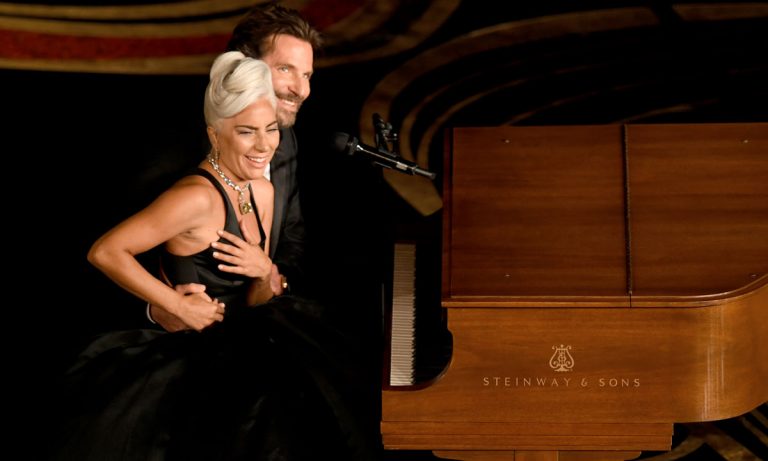
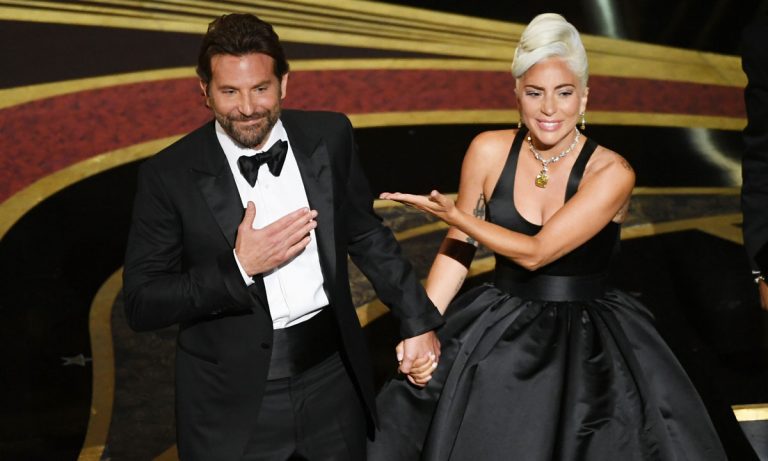
After Sunday’s now iconic “Shallow” performance at the Oscars, David Spade posted a picture of Cooper and Gaga on Instagram, asking his followers: “Is there any chance these 2 aren’t fucking?”
Esposito saw the post and simply commented “Ha,” adding fuel to an already large fire.
Although a “Ha” is hard to interpret without some context, it’s understandable if there’s some bitterness behind Esposito’s remarks. It must be hard to see your ex-husband so cozied up to Lady Gaga of all people.
Cooper’s current girlfriend and baby mama, Irina Shayk, was also a spectator at the awards show, sitting between Cooper and Gaga throughout the evening. Unlike Esposito, Shayk hasn’t made any remarks, and she looked sincerely happy and comfortable with the whole thing. According to E! News, a source close to Shayk says that she doesn’t see what all the fuss is about and that she knows that Cooper and Gaga are artists and were also in character. Can we all just leave them alone now?
It has been said the marijuana legalization discussion only ends once the record of every person every convicted for a pot-related crime is wiped clean. San Francisco District Attorney George Gascón seems to understand that this is an essential next step of the post-legalization movement. He announced earlier this week that his office would expunge more than 9,000 marijuana convictions.
It was just last year that Gascón teamed up with Code For America to employ the use of technology to efficiently determine which of the city’s pot offenders qualified for expungement under the language of Proposition 64. Essentially, his office used a computer program called “Clear My Record” to scour thousands of pot convictions – some of which go back as far as 1975 – setting aside the misdemeanors for clearance. A judge will start making these expungements official in the next few weeks.
“It was the morally right thing to do,” Gascón told the Los Angeles Times. “If you have a felony conviction, you are automatically excluded in so many ways from participating in your community.”
San Francisco is the first municipality in California to take this robotic approach to the expungement clause in the state’s marijuana law. In most cases, people with pot convictions have to go through a burdensome affair before their stoner sins of the past can be absolved. It’s a tedious process, Gascón said in an interview with NPR, which is the main reason that not even 30 people had taken the leap to get their records cleared ahead of the city’s mass expungement campaign.
“You have to hire an attorney. You have to petition the court. You have to come for a hearing,” Gascón explained. “It’s a very expensive and very cumbersome process. And the reality is that the majority of the people that were punished and were the ones that suffered in this war on marijuana, war on drugs nationally, were people that can ill afford to pay an attorney.”
Although people convicted of a misdemeanor pot crime may have never had to serve time in jail, a record marred with a drug offense, in many cases, can disqualify them from employment opportunities, college loans and housing. It’s just enough to keep otherwise law-abiding citizens from bettering themselves.
San Francisco’s leap on the expungement issue has reportedly forced other district attorneys around the state to consider a similar approach. The Code For America program could clear up to a quarter of a million marijuana convictions in California before the end of next year.
“What we have shown with marijuana is that this can be done en masse,” Gascón told the San Francisco Chronicle. “You can just go through the criminal records of thousands of people and provide the relief that they qualify for without having to have a lot of human resources invested in it.”
Us Weekly claims that Irina Shayk is utterly unbothered by all of this:
While Oscars viewers were swooning over Lady Gaga and Bradley Cooper’s intimate “Shallow” performance on Sunday, February 24, the Silver Linings Playbook actor’s girlfriend, Irina Shayk, watched from her front-row seat — and wasn’t bothered at all.
“Irina knows that Bradley and Gaga are artists,” a source exclusively told Us Weekly of the 33-year-old model. “It’s a nonissue for her. They were in character putting on an Oscar performance.”
Flamur Rexha, pleaded with daughter Bebe to stop posting pictures and videos that he described as ‘pornography’ after her newest music video was flagged on YouTube as ‘sensitive.’
Bebe Rexha’s father was reportedly not a fan of a recent Instagram post by his daughter.
In the since-deleted screenshot message, the Grammy-nominated singer’s dad, Flamur Rexha, pleaded with her to stop posting pictures and videos that he described as “pornography.”
“You better stop posting stupid pornography because you make me sick,” he wrote. ‘”I can’t take this anymore. Embarrassed to go in public everywhere I can go. I’m very upset with you, I can’t believe it.”
Along with the post, Rexha captioned, “My dad hates me.”
The 29-year-old pop star, whose latest music video “Last Hurrah” was flagged as “sensitive” on YouTube, eventually took down the post and later explained why she deleted it.
“My dad is not a bad guy. I should […] never have posted that screenshot. Im disappointed in myself. I was being sarcastic,” she tweeted. ‘I understand where he is coming as a father and that’s why the text was a bit harsh. I am upset that he still isn’t speaking to me, but he is still my father.
Such was the case for Angelina Jolie and her famous family on Monday night. Of course, it wasn’t just any ordinary movie night for the star and her youngsters. The actress moderated a special screening of the Netflix film, The Boy Who Harnessed the Wind, at the Crosby Street Hotel in New York City.
The movie is Oscar nominee Chiwetel Ejiofor’s feature directorial debut and stars him as well as Maxwell Simba, Aïssa Maïga, Lily Banda, Lemogang Tsipa, Philbert Falakeza, Joseph Marcell and Noma Dumezweni.
Ejiofor sat down with Jolie for a Q&A during the event, as did William Kamkwamba, whose memoir the film is based on. The film tells Kamkwamba’s tale of when he was a boy and figured out how to build a windmill to save his Malawian village from famine.
Angelina Jolie, Kids, Shiloh, Pax, Maddox, Zahara, Knox, VivienneMonica Schipper/ Getty for Netflix
Along with famous guests like David Schwimmer, Abbi Jacobson, Neve Campbell, Christian Slater, Gina Gershon and Edward Norton, all six of Jolie’s children with ex-husband Brad Pitt—Maddox, 17, Zahara, 14, Pax, 15, Shiloh, 12, Vivienne, 10, and Knox, 10—attended and happily posed for photos with their mama.
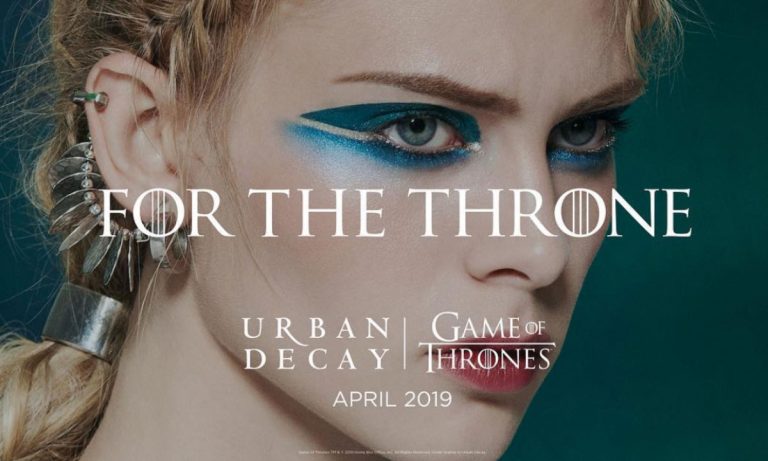
From Super Bowl commercials to board games, a surprising amount of businesses are trying to make a product that somehow relates to Game of Thrones. Urban Decay, a cosmetics company, had the wildest idea when they decided to create a Game of Thrones-inspired make-up line, which will hit shelves this April just in time for the final season of the show.
Now, when you see a White Walker you’ll think “beauty product” instead of “murderous frozen zombie.”
Details regarding the new make-up line are scarce but it was confirmed through the company’s Instagram that there’s some sort of Ice and Fire theme. Act surprised.
Although the idea behind the make-up line is a little silly, the colors and the pictures available look kind of cool, so we shouldn’t judge it before we try it on. Game of Thrones is an extremely beloved show that has changed the way in which we view TV, opening up a space for fantasy content. It’s watched by people of all genders and ages, so we predict Urban Decay’s line will have some sort of success.
Although Halloween is far off, this year you can expect less Khaleesi and more White Walkers. This time, the zombies will be kind of beautiful instead of creepy and morbid.
One month before the 2016 U.S. presidential election, an Access Hollywood recording of Donald Trump was released in which he was heard lewdly talking about women. The then-candidate and his campaign apologized and dismissed the remarks as harmless.
At the time, the authenticity of the recording was never questioned. Just two years later, the public finds itself in a dramatically different landscape in terms of believing what it sees and hears.
All contribute to a climate in which it is increasingly more difficult to believe what you see and hear online.
There are some things that you can do to protect yourself from falling for a hoax. As the author of the upcoming book Fake Photos, to be published in August, I’d like to offer a few tips to protect yourself from falling for a hoax.
Many fake images are recirculated and have previously been debunked. A reverse image search is a simple and effective way to see how an image has previously been used.
Unlike a typical internet search in which keywords are specified, a reverse image search on Google or TinEye can search for the same or similar images in a vast database.
Reverse image search engines cannot exhaustively index the vastly expansive, ever-changing content on the internet. So, even if the image is on the internet, there is no guarantee that it will have been found by the site. In this regard, not finding an image doesn’t mean it’s real – or fake.
You can improve the likelihood of a match by cropping the image to contain only the region of interest. Because this search requires you to upload images to a commercial site, take care when uploading any sensitive images.
2) Check the metadata
Digital images often contain rich metadata that can provide clues as to their provenance and authenticity.
Metadata is data about data. The metadata for a digital image includes the camera make and model; camera settings like aperture size and exposure time; the date and time when the image was captured; the GPS location where the image was captured; and much more.
The importance of the date, time and location tags is self-evident. Other tags may have a similarly straightforward interpretation. For example, photo-editing software may introduce a tag that identifies the software, or date and time tags that are inconsistent with other tags.
Several tags provide information about camera settings. A gross inconsistency between the image properties implied by these settings and the actual properties of the image provides evidence that the image has been manipulated. For example, the exposure time and aperture size tags provide a qualitative measure of the light levels in the photographed scene. A short exposure time and small aperture suggest a scene with high light levels taken during the day, while a long exposure time and large aperture suggest a scene with low light levels taken at night or indoors.
The metadata is stored in the image file and can be readily extracted with various programs. However, some online services strip out much of an image’s metadata, so the absence of metadata is not uncommon. When the metadata is intact, however, it can be highly informative.
3) Recognize what can and can’t be faked
When assessing if an image or video is authentic, it is important to understand what is and what is not possible to fake.
For example, an image of two people standing shoulder to shoulder is relatively easy to create by splicing together two images. So is an image of a shark swimming next to a surfer. On the other hand, an image of two people embracing is harder to create, because the complex interaction is difficult to fake.
While modern artificial intelligence can produce highly compelling fakes – often called deepfakes – this is primarily restricted to changing the face and voice in a video, not the entire body. So it is possible to create a good fake of someone saying something that they never did, but not necessarily performing a physical act that they never did. This, however, will surely change in the coming years.
4) Beware of sharks
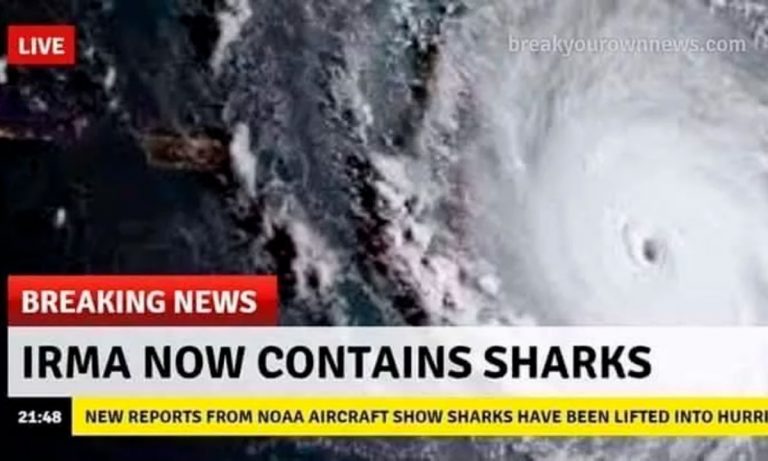
After more than two decades in digital forensics, I’ve come to the conclusion that viral images with sharks are almost always fake. Beware of spectacular shark photos.
I believe that it’s critical for the technology sector to make broad and deep changes to content moderation policies. The titans of tech can no longer ignore the direct and measurable harm that has come from the weaponization of their products.
What’s more, those who are developing technology that can be used to easily create sophisticated fakes must think more carefully about how their technology can be abused and how to put some safeguards in place to prevent abuse. And, the digital forensic community must continue to develop tools to quickly and accurately detect fake images, videos and audio.
Lastly, everyone must change how they consume and spread content online. When reading stories online, be diligent and consider the source; the New York Evening (a fake news site) is not the same as The New York Times. Always be cautious of the wonderfully satirical stories from The Onion that often get mistaken for real news.
Check the date of each story. Many fake stories continue to recirculate years after their introduction, like a nasty virus that just won’t die. Recognize that many headlines are designed to grab your attention – read beyond the headline to make sure that the story is what it appears to be. The news that you read on social media is algorithmically fed to you based on your prior consumption, creating an echo chamber that exposes you only to stories that conform to your existing views.
Finally, extraordinary claims require extraordinary evidence. Make every effort to fact-check stories with reliable secondary and tertiary sources, particularly before sharing.
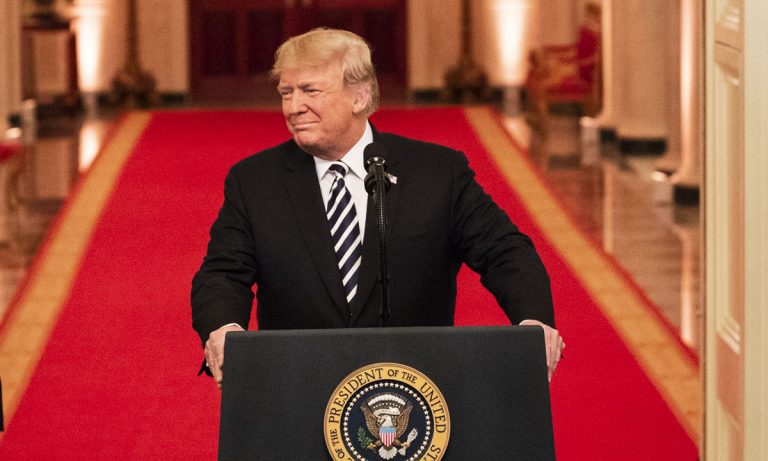
Many have wondered where President Donald Trump stands on the matter of cannabis reform. Since taking office, Trump has waffled between and around positions, largely avoiding taking stand on marijuana legalization and decriminalization. While some have suggested that Trump would be behind any federal legislation around reform, this is also the guy who appointed Jeff Sessions, known prohibitionist, as Attorney General.
But in a new interview on the Cannabis Economy podcast, Sen. Cory Gardner (R-CO) said that Trump was very much against Sessions’ anti-cannabis agenda. According to Marijuana Moment, Trump privately pushed back against the former AG on the day he rescinded the Cole Memorandum, the policy that discouraged federal prosecutors from going after cannabis in legal states.
When Gardner approached Trump on that day to inform the President his opposition to rolling back the Cole Memo, Trump interrupted him before he could finish. “We need [to] undo this” and “[Sessions] needs to stop this,” Trump reportedly told Gardner. “This sounds like something my grandpa said in the 1950s,” Trump allegedly said.
Listen to my interview with @Sethjadler from Cannabis Economy to learn more about the STATES Act and my work on marijuana policy ⬇️ https://t.co/v8LC9z7b6P
“It was very clear to me at that point that there was a disagreement between the president and the attorney general on this,” Gardner said.
Garnder’s conversations with Trump eventually led to the President publicly declaring his support for the STATES Act, the bipartisan cannabis legislation that would protect states legalizing and regulating cannabis without interference from the federal government.
While Gardner called Trump an “ally,” it also remains the case that Trump hasn’t really pushed the issue either way. He could’ve demanded the Cole Memo be reinstated, but did not. He could truly rally Republicans behind supporting the STATES Act, but has offered only tacit approval instead. A more accurate label perhaps would be Trump is “neutral” on cannabis—he won’t get in the way, but he’s not going to exactly help matters either.
Following a public string of poor choices and mismanagement, the 2019 Academy Awards were forced to go off script. Crazily enough, the loose vibe that resulted was just what the awards show needed, delivering a sleeker event where forced jokes were kept to a minimum and that managed to end before midnight. By eliminating the host’s position, the award show’s highlights and most memorable moments remained with key musical performances and the shell-shocked speeches of winners.
Despite the fact that Green Book, a very polarizing movie, took the most coveted award of the night, the 2019 academy awards were an overall good program. Presenters were made up of interesting pairings, Spike Lee finally won an Oscar, and a movie about menstruation won Best Short Documentary. Then there was Lady Gaga’s and Bradley Cooper’s musical performance, which featured some of the most inventive and impressing live TV direction in recent memory.
From Olivia Colman’s charming and confused Best Actress winning speech, to Bradley Cooper and Lady Gaga’s palpable sexual tension, audience members took to social media to vent, make jokes and express all of their emotions. Check out some of our favorite reactions below:
In collaboration with cannabis dispensary retailer MedMen, director Spike Jonze released a two-minute commercial starring Jesse Williams that spans the history of marijuana in America. The ad covers George Washington’s hemp fields, the hippie movement of the 60s and 70s, as well as “Reefer Madness” and the racial injustice that prohibition has wrought.
The ad is designed to spur the “normalization of cannabis,” MedMen CMO David Dancer explained to AdWeek. The company actually vies the two-minute video as more of a “statement” than a commercial.
“We had a desire to create a commercial with a profound message,” Dancer said. “Our core value is around ensuring that people can lead safe, happy, healthy lives with cannabis being a part of it.”
Williams jumped at the opportunity to work with Jonze, whom Williams calls a “genius,” but also the opportunity to “have an impact on culture; we are taking that responsibility seriously and trying to strip some of the mythology around it, via a history lesson,” Williams said in an interview.
“I think a connective thread needs to be made, because the truth is, in middle-income white America, [cannabis] is already pretty normal: it’s the joke in every single coming-of-age movie, from Animal House to Superbad. White people know their kids smoke weed … They’re selling it, and buying it, but it’s not that big of a deal, because they’re human beings with potential in their lives, and that’s okay,” Williams said.
“But when black and brown folks do it, we’re thrown in cages for the rest of our lives, shot in the street, and then it’s justified in the news because someone might have had some marijuana in their system,” he added.
The commercial also serves as much-needed good publicity for MedMen, which faces multiple lawsuits at the moment. One of the more prominent lawsuits is from former CFO James Parker, who alleged wrongful termination from the company and brought to light unsavory behavior and potential racism from the company. Parker’s lawsuit prompted serious backlash, including the New York Medical Cannabis Industry Association severing ties with the company.
You can catch the commercial across digital spaces, as well spots on connected TV networks (including Bravo, CBS Sports Network, Oxygen, MSNBC, Lifetime and Food Network). MedMen also announced the ad will be shown in movie theaters in Nevada, California, and Michigan.
Correction: An earlier version of this story misstated the commercial appearing on TV channels. “The commercial was ultimately not allowed on select networks to which it was submitted due to FCC requirements and therefore is not appearing on TV,” a MedMen representative stated.
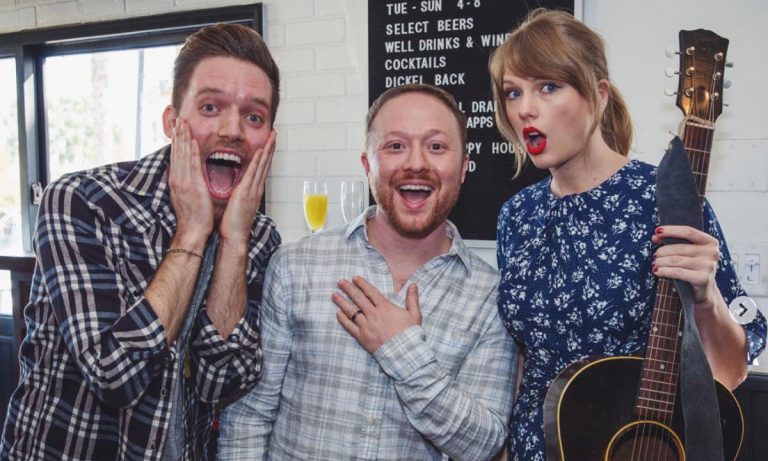
Taylor Swift made a super-fan’s engagement party extra-special.
“There was a person who is not here, who sort of played a part in all of this,” Alex Goldschmidt announced in a video posted to Instagram. “So I would like to welcome — and if you could give a warm welcome to — my friend Taylor.”
“Alex emailed me and said he was going to do this, that there was a song that was really special for you, too, called ‘King of My Heart,’” Swift said.
“So I’ve come prepared,” she added, motioning to her guitar. “I’ve been off tour for a while, but hopefully it’s alright. This is from Alex but sung by me.”
Friendly exes. Lady Gaga and Christian Carino bumped into each other at a pre-Academy Awards bash three days after their split made headlines.
The former couple were seen speaking at CAA’s pre-Oscars party on Friday, February 22. “Christian Carino walked into the party … said hi to Gaga at one point,” a source exclusively tells Us Weekly.
“But it was brief and then he went to another room.” The “Million Reasons” singer, 32, was also spotted alongside her A Star Is Born costar Bradley Cooper at the same event.
The pair were talking “in a corner together all night,” the insider reveals to Us. “They looked so close, they almost seem like a couple,” the source adds.
Fans have been speculating that there are romantic sparks between the costars, despite the fact that Cooper is dating Irina Shayk, with whom he shares daughter Lea, 23 months. (The model was not present at the party.)
Somehow, long before she became royal, Kate amassed an estimated personal fortune worth about $9 million
Kate didn’t really earn her millions in the same way that we, the unwashed masses, earn our salaries. That is, by showing up, logging on and putting in eight hours of trying to look busy for the boss.
Kate’s dough actually comes courtesy of her parents, Carole and Michael Middleton, who have built up their family business such that it is now worth about $54 million.
Interestingly, the clan was pretty cashed up long before Carole had the idea to sell paper plates and cake toppers to frazzled mothers.
Michael’s grandfather set up a seven-figure trust for his descendants, which is said to have been used to help pay the astronomical school fees for Kate, Pippa and James. We’re talking up to $633,000 for high school per child here.
Both Wills and Harry also inherited about $19 million from Princess Diana’s will when they turned 30.
Interestingly, Kate’s bank account beats that of Meghan Markle’s, who is said to be worth about $7 million, though she earned her moolah by actually working.
CBD is staying parked in the top trend spot this year, and even the negative news is only helping awareness and normalization. Despite strange crackdowns from Los Angeles and New York City that seem to be only temporary, the Farm Bill has loosened up the reins, and companies are spreading their CBD ideas far and wide.
Tinctures are among the most popular delivery systems for cannabidiol as things stand right now. They come in oil bases, glycerin bases, and sometimes alcohol. But flavor is mostly an afterthought, as there’s usually only a few flavor choices. Many brands offer peppermint CBD tincture, but is it more than just an approachable flavor?
The brands that use this flavor may be giving you more than just a minty finish, as many people use peppermint for its own wellness benefits. Here’s some Peppermint CBD tinctures to try, and a bit more on why this is a good place to get your cannabidiol.
Teeth + Gums
Oral health is a huge source of mintiness, and we see every iteration of mint toothpaste, floss, and rinses on the market. Some CBD tinctures are great to add to an oil pulling routine, infusing the oil you swish with peppermint for freshness and cannabidiol to dampen gum inflammation. It’s like oily mouthwash but really helps with sensitivity and whitening teeth.
https://www.instagram.com/p/BosSxC5HcZU
Mint flavor has always been used for cleansing the mouth, it has a palate refreshing effect that made its way into oral care products. This flavor comes from terpenes, just like cannabis, and has antibacterial and anti inflammatory properties, also quite useful for teeth.
Drop a few drops of peppermint CBD tincture under your tongue after the morning brush to boost absorption and share the CBD love with your teeth, too. I love Veritas Farms 250 mg Peppermint CBD tincture for oral dosing, it soaks in and the oily feeling isn’t too overwhelming.
Stomach
Motion sickness and stomach issues all benefit from some mint when things are unpleasant. Great for travel and stressful situations, a Peppermint infused CBD tincture could be the ticket when you don’t feel so good. Tonic’s Chill formulation with 800mg gives you a bigger dose per drop, and other wellness boosting herbs are in the mix.
Photos by Danielle Guercio
The method with which you use peppermint CBD tinctures can make a difference. If you’re a heartburn sufferer, capsules can help deliver it into the stomach vs if you take orally or sublingually. Swallowing mint can exacerbate GERD and acid reflux, but mint inside the colon can help with IBS, so it’s also a good idea to speak with your doctor about the best approach.
Pain and headaches
Mint is always welcome when your head is in a vice. Everything from sniffing it to topically applying it can make you much more comfortable. Smearing some on the back of your neck, as well as carefully on the temples and forehead (avoid eyes!) can help reduce tension and other headache symptoms.
Dropping some internally or sublingually can also be a good idea when you have a headache, inflammation is like a fire that needs to be put out when it’s acute, rather than something that needs slow and steady dosing.
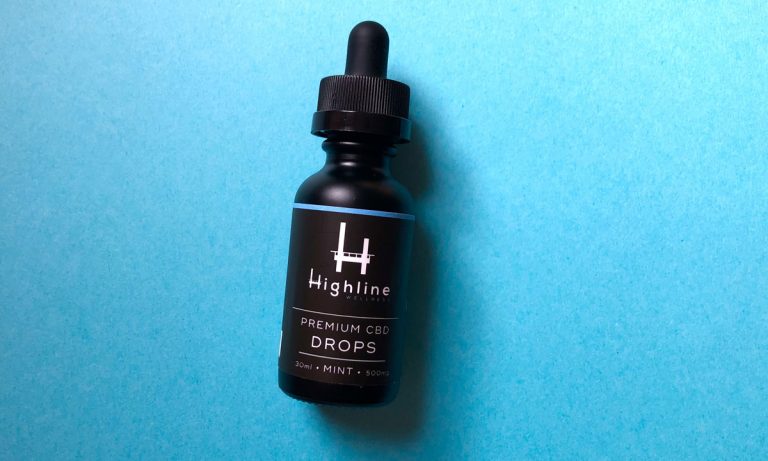
For this, I grab Highline Wellness CBD Tincture, the mint is a bit more pronounced, which I find personally helps with tension faster.
When sickness or a bad health day come calling, CBD can be the choice between functioning and misery for some people. Adding peppermint aids various symptoms that CBD tackles, so it’s really a synergistic match for many of us.