Friday, June 26, 2026
Home Blog Page 1010

This App Lets You Recover Deleted Photos From Your iPhone Without Backup

If you’ve ever accidentally deleted a photo only to find that it was MIA from your “recently deleted” folder, you’ll appreciate this app. Even if you don’t have backup from iCloud or iTunes, which comes with its own set of problems, you might want to check out a tool called dr.fone — Recover. The folks at Tech Advisor are big fans.

According to the site:

When you’re dealing with an iPhone, you should only use 100% trust-worthy third-party tools. That’s why we’re confidently recommending dr.fone — Recover. It’s a tool that has been rolled out by one of the world’s leading tech enterprises called Wondershare, which has received critical acclaim from leading media outlets such as Forbes and Deloitte. Furthermore, it also enjoys the faith of millions of users around the world. As such, you can put your faith in it completely.

Here’s how to recover deleted pics in 7 easy steps: 

  1. Connect your iPhone to the computer with a data cable.
  2. Install dr.fone onto your computer and launch it.
  3. Select the ‘Recover’ option from the main menu.
  4. Your iPhone will get detected automatically and you’ll be taken to the next window.
  5. You’ll find a blue panel on the left with three options. Select the option called ‘Recover from iOS Device.’ You’ll find a menu of the different types of data in the device, some of which fall under the ‘Deleted’ category. Choose ‘Photos’ and any other category that applies to you. Click ‘Start Scan.’
  6. Once the scan is done, you’ll be taken to a gallery.
  7. In this gallery, you can go through photos and images in the gallery and you can scroll through categories on the left-hand panel. Choose the categories that apply to you and then go through the images on the gallery. Select the images that you want to recover and then click on ‘Recover to Computer.’

Now, Tech Advisor has some screenshots and other details that might help you find your photos a little easier, especially if you’re a visual learner. They say once this 7 step process is done, you’ll find all your “lost” photos on your computer. Good luck!

Hershey’s Suffers Setback In War On Marijuana Edible Packaging

Despite the recent dismissal of one of its lawsuits against an edibles maker, Hershey seems ready to return to its legal war on edibles makers.

The company’s most recent day in court with the industry was a loss. A suit against an Oakland, Calif., dispensary was dismissed earlier this year after the retailer fought back.

Harborside Health Center, which operates two dispensaries in the state, was targeted by the candy giant. The retailer claims it spent months dealing with threats from the company’s lawyers. It finally countersued in December. The Hershey suit was dismissed in late January.

Hershey wanted Harborside to pay $20,000 for “liquidated damages” and an agreement with a confidentiality clause, Harborside attorney Henry Wykowski told Marijuana Business Daily.

“Harborside refused confidentiality, and I told Hershey’s that we were prepared to proceed with the litigation,” he said. “And guess what happened? They caved the next day.”

Earlier in 2017, Hershey had sued Good Girl Cannabis Co., a Northern California edibles maker. The owner told MBD that the legal action was settled quickly and amicably.

The legal actions came after it looked like Hershey had given up trying to chase the growing industry. In 2014, the company sued a Colorado edibles maker for infringement, citing products such as Ganja Joy bars and Dabby Patty. The candy maker produces Almond Joy and York Peppermint Patties.

Colorado-based medical marijuana manufacturer Tincture Belle settled the suit.

A second suit filed against Seattle dispensary Conscious Care Collective ended with the dispensary claiming it convinced Hershey that the dispensary was a reseller, not a manufacturer.

“At the end of it, we walked away not owing them anything,” Conscious Care co-founder Trek Hollnagel told MBD. The business closed in 2016.

The Harborside suit didn’t involve chocolates, but rather “Jolly Meds,” a candy Hershey contended was a little too close in the marketing to Jolly Rancher. As with Conscious Care, the retailer claimed as a reseller, not a manufacturer, it wasn’t liable. The producer, changed the name of the goods to J:Meds late last year and has a trademark pending approval by the government.

Can Government-Approved Cannabis Beat Street Weed?

A key goal of legalizing recreational cannabis is squeezing out illegal suppliers. But how competitive will legal cannabis retailing be against established black markets?

That’s a key question for federal and provincial politicians. Governments don’t like cannabis consumers funding organized crime.

That question may also interest investors. They’ve pushed up cannabis stock prices and created demand for four cannabis exchange-traded funds. Alcohol and tobacco companies have bought stakes in cannabis growers. Suppliers of hydroponic equipment and online retailing software could benefit too.

To answer the question, consider the “four Ps” that marketers work with in every industry. Those are the product characteristics, price charged, place where sold and promotion activity. From this viewpoint, legal vendors have some potential advantages. But they face major challenges under current government plans.

Pricing Challenges

Price is the competitive element politicians mention most. In Colorado, cheap legal cannabis means black markets control only 20 per cent of state sales. But in Washington state, where prices are higher, black markets capture 50 per cent.

In Canada, governments agree cannabis prices must be competitive. They’ve suggested $10 per gram, including excise and sales taxes.

But Statistics Canada estimates market prices fell below $7.50 last year, and farther since then. Vancouver street prices reportedly are near $5. And street vendors don’t charge tax.

Meanwhile, most provinces lack confirmed supplies, so they risk product shortages initially. Growers might prefer exporting their limited stocks to Germany’s higher-priced medical cannabis market.

Provincial governments could face awkward choices. If they price high to cover costs, they’ll be uncompetitive. If they price low to compete, taxpayers may end up subsidizing drug users.

Longer term, more growing capacity will come online and enable lower prices.

Other pricing questions remain unanswered. Will all products share the same price? Or will prices differ by brand? Will each retailer set their own prices?

Retailers Lack Convenience

The places cannabis is sold also affect competitiveness. The western provinces will allow private-sector retailers. Ontario and its eastern counterparts are keeping retail in the public sector.

The public-sector plans lack convenience due to limited store numbers. That aids the black market.

For example, Ontario plans 150 outlets by 2020. That’s only one per 95,000 people, about as common as Walmart. It’s enough for planned shopping trips, but not for consumers who have unexpectedly run out.

By contrast, Ontario has 2,067 locations selling alcoholic beverages: One per 7,000 people. Those include liquor agency outlets, beer stores and wineries.

Quebec also expects 150 cannabis outlets eventually, or one per 56,000 people. New Brunswick plans 20, so one per 38,000.

Contrast those numbers with Colorado’s. It has more than 800 stores, or one per 6,250 people.

Private stores out West will likely be more numerous. But they’re banned from selling alcohol or tobacco. That specialization will restrict retailers’ revenue sources and the number of viable stores.

Provincial plans have barely mentioned on-site consumption. Countless bars and restaurants serve alcohol drinkers. Licensed cannabis “lounges” similarly could serve cannabis users, especially renters in non-smoking buildings and American tourists. Otherwise, those groups may stick with black markets.

Product Advantages

Consumers can’t evaluate cannabis products without smoking them. The cannabidiol (CBD) and tetrahydrocannabinol (THC) concentrations vary greatly. Consumers also can’t detect contaminants like pesticides and mold.

Quality-assurance measures therefore could give legal cannabis products a competitive edge. Each province except Saskatchewan plans a single public-sector wholesaler. That centralization will facilitate large-scale testing.

Consider Ontario’s liquor agency. Its Quality Assurance Lab examined 28,000 beverages last year, rejecting 11 per cent.

Quality assurance, combined with recognizable brand names, would help products develop performance reputations. Some may offer a mild buzz, others a powerful high. Consumers could learn to rely on consistently performing brands, instead of unpredictable street weed.

However, branding faces challenges. Federal law limits package designs. No people, animals or lifestyle images are allowed.

Some critics even want plain packages, to discourage cannabis adoption. But that would make it harder for growers to establish reputations, neutralizing a key advantage over illicit products.

It would also reduce growers’ incentive to boost quality, especially if prices are fixed. As near generics, they’d instead try to lower production costs. Or perhaps hike THC numbers to stand out. Should we encourage cheaper, stronger pot?

The lack of edibles, like brownies and beverages, is a glaring gap. Ottawa won’t legalize those for another year. Unlawful suppliers keep market control until then.

Promotion Limits

Federal rules also limit promotional activity. “Informational” ads are OK. But no evoking emotions, and no lifestyle depictions involving recreation or excitement.

Those clauses undermine legal cannabis’ competitiveness. Good ads evoke emotions. Lifestyle images explain complex products simply. And isn’t this law about “recreational” use? Growers consequently have proposed more flexible rules.

Because federal law prohibits self-service, sales staff will be important. Store ownership may matter here. Public-sector staff might be better at consumer education and harm reduction. Private-sector sellers may respond better to customer preferences and market trends.

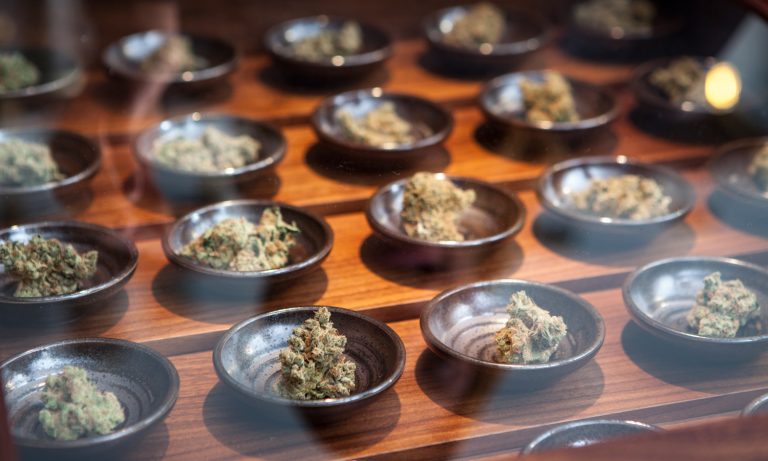
Regarding in-store promotion, New Brunswick will display products under glass. Consumers will see packaging, read labels and visually compare products.

But Ontario wants things “similar to how tobacco is now sold.” That implies customers won’t see or touch products before purchase. It’ll be tough for consumers to develop preferences, and for growers to build reputations. That further weakens legal products’ competitiveness.

Prognosis Is Mixed

Overall, governments’ retailing prospects look mixed. Legal cannabis could stand out on product quality if growers earn reliable reputations. But edibles remain absent for now. Promotion could give legal cannabis another edge, if governments loosen up the rules.

The ConversationBlack markets will initially out-compete the provinces with convenient places. That will decrease over time, especially out West. But it won’t disappear without legalized lounges. Illegal vendors may always have some price advantage. Provinces can minimize that by forgoing profits.

Michael J. Armstrong is an associate professor of operations research at the Goodman School of Business, Brock University

This article was originally published on The Conversation. Read the original article.

William and Kate Pose With Long Term Fan

You’re never too old to be a royals watcher.

Earlier this week, Prince William and Kate Middleton met 101-year-old Jane Johnson when they made an appearance at the Fire Station, an iconic building in Sunderland, England that recently underwent a nearly $5 million overhaul to be converted into an arts and culture center. According to INSIDER, representatives from Springboard, a Sunderland community-based charity, helped ensure that Johnson had a special moment with the royal couple.

Related: World’s Oldest Woman Reveals Her Raw Egg Diet

At the 1:48 mark, you can see Johnson present Prince William and Kate with flowers and a quick chat.

According to this tweet from Sunderland reporter Sophie Brownson, Johnson’s brother used to work at the old fire station.

Charlotte Hunter, Springboard’s Fundraising and Events Officer, was standing next to Johnson’s granddaughter when she met Kate and Will and tells INSIDER, “They both leaned in close and spoke slower and sweeter with soft tones so she could understand them, then were very attentive with her and spent time to make sure she knew she was a special guest.”

William and Kate posing with long term fan is why the public has taken them to their hearts.

This Vibrator Will Order Domino’s Pizza After You Orgasm

0

There’s a vibrator on the market that not only gets you off, it gets you pizza. Is there another device that’s this considerate of your needs?

Developed by a company called CamSoda, RubGrub (yes, that’s the name) has an option to add your credit card information so that you can press a button that orders Domino’s pizza for you. Domino’s comes in 30 minutes. Do you?

The company’s vice president, Daryn Parke, predicts that they’ll add other pizza providers to their vibrator/delivery service enabler. Huffington Post reports that Domino’s knows nothing of this vibrator, and that the only way people with the device are able to order pizza is because the company’s API is public.

CamSoda released a statement explaining their device and why they decided to add this pizza feature. “Masturbation, while ultimately enjoyable, can be a strenuous physical activity during which an individual exerts a lot of energy and burns many calories. Inevitably, once someone has climaxed, they feel lethargic and hungry. Now, in order to enjoy your Saturday night, all you need is your RubGrub device. Get off and get stuffed, all with the quick click of a button.”

While it’s true that sex and all its related activities can make people hungry, the RubGrub makes us wonder, “why the preference for pizza?” Does CamSoda have some insider knowledge that the general public doesn’t? Also, why would you need a device that’s capable of getting you off and of ordering food? These are all very important questions prompted by a very unusual function.

The RubGrub is in its last stages of development, and it’ll be available in a few months for the price of $19.95.

How Canada’s Rec Marijuana Delay Hurts Residents And Investors

As Canadian legislators continued to stall and the infrastructure necessary to run a national recreational cannabis industry remained unbuilt, it seemed all signs pointed to Canada missing its proposed timeline of marijuana legalization. That original mark of July as the month legal recreational marijuana sales would start in Canada has now been pushed back at least a month by Canadian officials.

The problem relies on the provincial level. From a federal perspective, the Canadian Senate is expected to vote on legislation that will authorize recreational cannabis sales by June 7, 2018. In fact, the votes appear to be there as well and Canadian officials expect no delay in that regard.

The problem lies with Canadian provinces. Estimates state the provinces will need another 8 to 12 weeks to finalize recreational marijuana sales within their individual provinces, according to health minister Ginette Petitpas Taylor. The health minister further clarified that Canada intends to begin all marijuana sales simultaneously, meaning one province dragging its feet could put the whole country behind.

Canadian residents aren’t the only ones dismayed at such news. It’s also thrown the Canadian marijuana stocks in flux as pretty much all major Canadian marijuana growers saw drops. “Canopy Growth (NASDAQOTH: TWMJF) stock fell nearly six percent on the news of a delay. Aurora Cannabis (NASDAQOTH: ACBFF) and Aphria (NASDAQOTH: APHQF) slipped seven percent, while MedReleaf (NASDAQOTH: MEDFF) stock dropped eight percent,” according to Madison.com.

It hurts companies like Aurora Cannabis more than just a drop in stock value. By all accounts, Aurora paid a fortune to have first to market rights over competitors. Not only the expense to build its Aurora Sky facilities, they also claimed the largest marijuana acquisition in history with the $852 million buyout of CanniMed Therapeutics. That gave them an advantage to become a premium supplier when the July 2018 rollout started. Now the delay my give competitors a chance to catch up.

What remains a scary proposition for investors and citizens? A further delay of a proper release date is still a distinct possibility in Canada.

These Cities Have The Cheapest Marijuana In The World

Although the most expensive cannabis is in countries where it is illegal and penalties can be very harsh, the cheapest cities to buy a gram are more of a mixed bag. Some have stiff consequences, but others have an array of regulations or simply don’t enforce existing laws depending on circumstances. And even existing laws can be contradictory.

Seedo, a company that makes a device allowing users to grow cannabis plants at home, recently released a report that shows where the cost of a gram is cheapest in cities around the world. They compiled the list through crowdsourcing and cross-referencing it with the World Drug Report 2017.

5. Panama City, Panama

Price per gram: $3.85

Legal status: Medical only

The country banned the use and cultivation in 1923. But despite officials’ hard-talk about drug use, the country legalized cannabis for medical and scientific use in 2016.

Demand may be part of the reason prices are so low. According to the United Nations Office on Drugs and Crime, 3.6 percent of the country’s total population uses cannabis.

Penalties, when enforced, can be stiff. Possession of a small amount of cannabis can earn offenders a minimum of a year of incarceration. But as webehigh.org notes, if you are caught with that small amount, talking your way out of a ticket — and/or a bribe of $5 to $10 — is a distinct possibility.

4. Jakarta, Indonesia

Price per gram: $3.79

Legal status: Illegal

Indonesian law seems to have mixed emotions about the drug. Cannabis was banned during Dutch rule in 1927 and the law is still on the books. Possession can result in a sentence of four to 12 years in prison and up to a $896,000 fine — depending on the amount. For traffickers, a life sentence is possible or even death.

However, a 2009 law allowed that if a user — or their family — voluntarily reports violating the law to authorities, charges can be dropped.

3. Asuncion, Paraguay

Price per gram: $2.22

Legal status: Medical only

What country is one of the world’s largest producers of cannabis? Paraguay — second only to Mexico in Latin America and supplier to much of South America. Where can possession of the substance get you up to five years behind bars? Paraguay.

However, at a judge’s discretion, an offender caught with a small amount can go to rehabilitation instead of jail. The country approved the use of medical cannabis in 2016. Recreational possession wasn’t illegal until 2015.

Demand, again, may play a role more so than penalties anyway. Vice reported that less than one percent of the country’s population uses cannabis.

2. Bogota, Colombia

Price per gram: $2.20

Legal status: Mixed

The country made cannabis for medical use legal in 1986. But a patchwork of regulations prevented growing and producing it for patients on a national scale. The government cleared up the issue 19 years later.

In 2012, Colombia decriminalized cannabis, allowing for possession of up to 20 grams and growing up to 20 plants. But public use and selling the substance is still against the law. 

“That’s the catch,” said cannabis cultivator and manager at How High Smoke Shop, who goes by the alias Paco María. “It’s difficult to understand Colombian law because you can grow up to 20 plants, but if police catch you with more than 20 grams, you can be in very big trouble.”

It can put personal use growers under a lot of stress, especially considering the size that plants can grow outdoors in Colombia—they’re huge!

As with Paraguay actual use among the country’s population is low.

1. Quito, Ecuador

Price per gram: $1.34

Legal status: Mixed

Ecuador also has a mixed bag of cannabis regulations. Possession of 10 grams for personal use is completely legal. As is medicinal use. But selling and growing cannabis is illegal.

Foreigners may find actually closing the deal difficult or even dangerous. Because of kickback scams between dealers and the police, numerous publications warn about tourists making purchases on the street—webehigh.org says get it delivered.

….  and in the U.S.?

At number 36 on the list, Seattle, Wash., was the cheapest U.S. city at $7.58 a gram. The state was among the first in the nation to have state-controlled sale of cannabis for medical use. Voters made recreational use legal in 2012. The state licenses all retail businesses and growers. Growers may not sell directly to consumers.

The cheapest North American city was Vancouver, Canada. It ranked number 24 at $6.40 a gram. Medical cannabis was made legal in 2001. Recreational use and retail sale was approved by the government in 2017 and is supposed to go into effect this summer.

Could Blockchain Give Cannabis The Legitimacy It Seeks?

0

Chances are you’ve heard the words cryptocurrency and cannabis next to one another in financial investment circles. That’s because over the past five years these two properties have been the hottest assets within the investment world, producing dramatic ROIs and luring millennials, a generation previously lukewarm about trading stocks, into the trading world.

The success of these two types of assets are from different catalysts, however. Marijuana stocks and their newfound lucrative nature is more easily explained: As more states legalize, more business becomes available, raising more capital, and so forth. At the same time, Americans have never been more in favor of cannabis, especially as a medicine.

Cryptocurrencies have more complex reasons why they have risen so dramatically over the past year. As Business Insider notes, however, much of the success can be tied to the blockchain technology that underpins cryptocurrencies. “Blockchain is the digital, distributed, and decentralized ledger that underlies virtual currencies and is responsible for recording all transactions without the need for a third-party, such as a bank,” writes Business Insider.

While blockchain and cryptocurrencies have long flirted with replacing the problematic all-cash systems the cannabis industry currently uses, it appears one small-cap marijuana stock might have found a solution in Emerald Health Therapeutics, a Canadian cannabis company that’s  poised to become one of the biggest marijuana suppliers.

But this February, Emerald Health announced it was in the process of finalizing a joint venture with DMG Blockchain Solutions—named CannaChain Technologies—and will “provide blockchain-based supply chain and e-commerce marketplace for the marijuana industry.”

Here’s the important nugget from their press release:

The new solution will provide extensive plant, growing, third-party testing, and handling data, as well as offer enhanced trust of origin, quality, and safety based on the blockchain’s ability to maintain immutable records as cannabis products flow from seed to sale through the supply chain. Relevant stakeholders for this technology alone include producers, distributors, shippers, government agencies, and consumers.

Blockchain could provide a transparency and authenticity that would legitimize the cannabis industry to the larger business world. However, blockchain technologies are just as unproven as cannabis when it comes to scaling to the large proportions angled by the two companies. Already in Canada, the cannabis industry is struggling in its incipient stages. Because distributors, retailers, and growers aren’t yet in sync, the sale of legal marijuana could experience a three-month delay.

So while we’ll have to wait to realize the efficacy of such a plan, it remains another intriguing development in the relationship between blockchain and cannabis.

The Country’s First State-Licensed Cannabis Spa Is About To Happen

How great would it be to visit a spa where you could get cannabis-infused massages, ganja yoga and other wellness activities? It is looking like it might be a reality in Denver.

Owners of the Utopia All Natural Wellness Spa and Lounge have already submitted a social consumption application that, if approved, would make them the first fully licensed, state-legal cannabis spa in the nation.

If approved, Utopia will offer patrons “cannabis infused massages, ganja yoga, and other cannabis-friendly activities to patrons 21 and older, as well as meditation coaching, educational seminars, and patient support and networking groups,” according to a press release. It will not sell, however, any cannabis or cannabis-infused products.

Owner Cindy Sovine says she also plans to offer meditation coaching, educational seminars and support and networking groups, not to mention “cannabis-friendly cooking classes, corporate retreats and other private functions,” according to a press release. There will also be designated consumption areas (for 21 and older guests) for vaporizing, but smoking will not be allowed as it’s prohibited by the Colorado Clean Indoor Act.

“Our mission,” says Sovine, “is to provide a place of retreat for cannabis consumers and access to high-quality products and services for those who wish to explore natural options for self-care.”

She says she looks forward to opening the doors of Utopia, not just to cannabis consumers, but to all adults interested in natural self-care and making healthy changes to their lifestyle.

The Only Primer You Need: Butane Vs. CO2 Cannabis Extractions

Butane, or butane hash oil (BHO), gets a lot of flack in the cannabis community and press for its volatility and health risks during and after extraction, yet it’s the most popular method of cannabis extraction. How does it really work and is CO2 really safer? Let’s examine the facts and evidence.

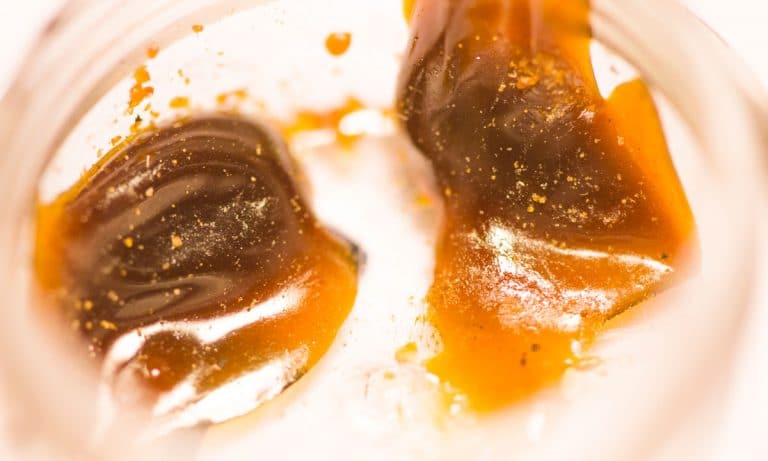
Cannabis extractions isolate the psychoactive components of the plant and fuse them into what’s known as dabs or oil. Dabs are most commonly extracted using butane, while vape pen oil is usually concentrated via CO2.

If you’ve never experienced either one, dabs are powerful sheets of concentrate that often come by the gram and have different consistencies depending on how they were treated post extraction. It only takes a little bit on the end on a dabber to be dipped onto a hot nail to get one flying into outer space. On the other hand, vape pens are discreet concentrates that come with greater control of the high.

One of the main concerns when making concentrates using the BHO method is that the producer may not allow for all of the butane to evaporate off and out. Having residual solvents in the final product is irritating to the lungs and can leave pollutants in the body. However, the method of making dabs has come a long way in the educational department and most extractors know the P’s and Q’s of making concentrates by now.

CO2 is a gentler extraction process, with less volatility, but it’s much harsher on the cannabis plant itself. Often this means missing out on terpenes that some say enhance the high and all say contribute to the flavorful aromas we love so much about cannabis. CO2 also does not extract as much THC as butane. For many, though, the pluses outweigh the minuses. CO2 extraction is cleaner with less of a chance of ingesting residual solvent, it’s more environmentally friendly and is nonflammable.

Not to imply that butane and CO2 are the only extraction methods out there. There are other solvents, like alcohol, that are used to make concentrates, but there are also solventless methods. Solventless is considered by many to be the superior way when it all comes down to it. There are no residuals, the flavors are out of this world and, though more difficult to press into dabs, it is more often than not worth the extra effort to go the solventless route.

Don't Miss Your Weekly Dose of The Fresh Toast.

Stay informed with exclusive news briefs delivered directly to your inbox every Friday.

We respect your privacy. Unsubscribe anytime.