Wednesday, June 17, 2026
Home Blog Page 584

5 Ways To Be Happier In 2020

We all want a successful and happy new year. Here are five tips that can help you get there.

January is the month for resolutions and positivity. It’s the time of the year where we make lofty promise to ourselves, such as avoiding McDonald’s and finally doing that thing that we’ve been meaning to do for the past five years.

While our New Year’s promises tend to get a little out of hand, there’s nothing wrong with aiming high, especially when it comes to our happiness.

Working on having a positive mood will make everything in your life better. If you’re happy you’ll have better relationships, better work performance, more productivity, and energy to get things done. Here are 5 ways that can help you feel more at ease and be happier in 2020:

Conquer one anxiety at a time

Start off slow by selecting one anxiety and trying your best to control it. Think of something prevalent in your life that holds you back from doing other things and enjoying yourself to the fullest. The Huffington Post recommends selecting an anxiety, choosing a reward to treat yourself afterwards and facing it.

“The thing to keep in mind is that very often happiness is found just on the other side of a doorway guarded by our anxieties,” says clinical psychologies Forrest Talley. “And the new year is a great time to start kicking down some doors.”

Develop a better sleep schedule

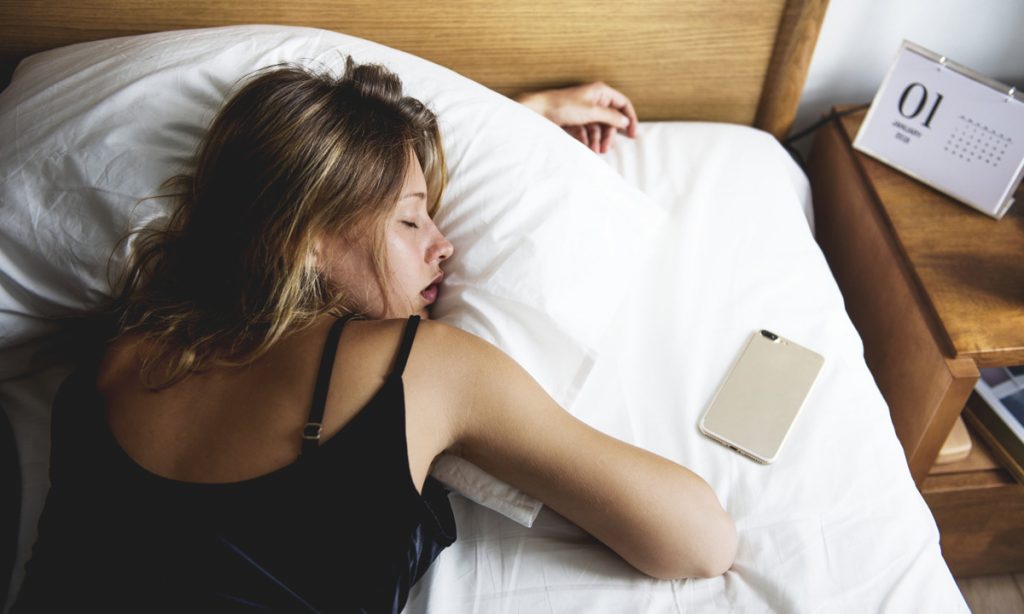
Sleep hygiene is very important and hard to maintain. Try your best to develop a routine before you go to bed, ensuring that you’re clocking in your eight hours and that you go to bed at the same time every night (for the most part). Better sleep habits will make you feel more rested and vitalized, especially when you commit to them over long periods of time.

RELATED: 5 Things Sleep Experts Would Never Allow In Their Beds
5 Simple Ways To Get A Better Night's Sleep
Photo by rawpixel.com

Limit your unhealthy habits

List out some of your unhealthy habits and do your best to cutback on them. If the list gets too overwhelming, try working on the most pressing behaviors, the ones that influence your life the most, and limiting them. The less habits you have to deal with the better and less stressed out you will be.

Practice mindfulness

We tend to spend way too much time worried about the future or about past behaviors, often forgetting to enjoy the moment. While “staying present” is great advice, it’s not the most practical. Try to meditate and to practice mindfulness in increasing amounts; do it a couple of times a week until you’re able to do it once a day.

RELATED: How To Give Yourself A Year End Review

How Cannabis Can Help You Take Your Meditation Practice To The Next Level
Photo by Lua Valentia via Unsplash

Try to get off the “hedonic treadmill”

The hedonic treadmill is a theory that states that whatever happens to us, we tend to revert to our base state of happiness, no matter the event that occurs — be that buying a house, getting a new job or getting married. So why not increase your happiness baseline?  Psychology Today recommends maintaining your new level of happiness by switching things up and introducing new activities to your repertoire.

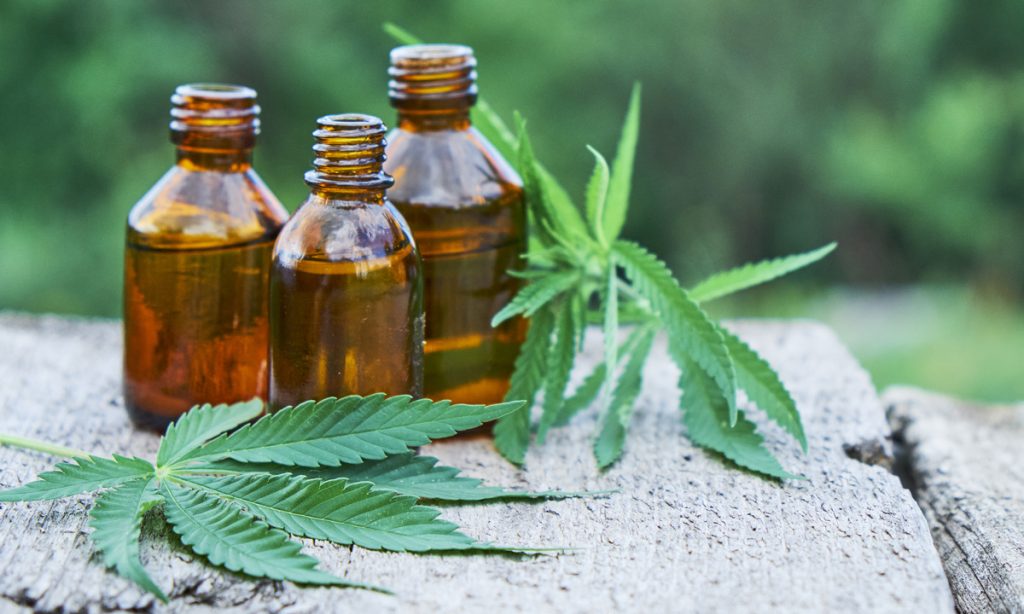
Can CBD Negatively Affect How Your Body Processes Medication?

0

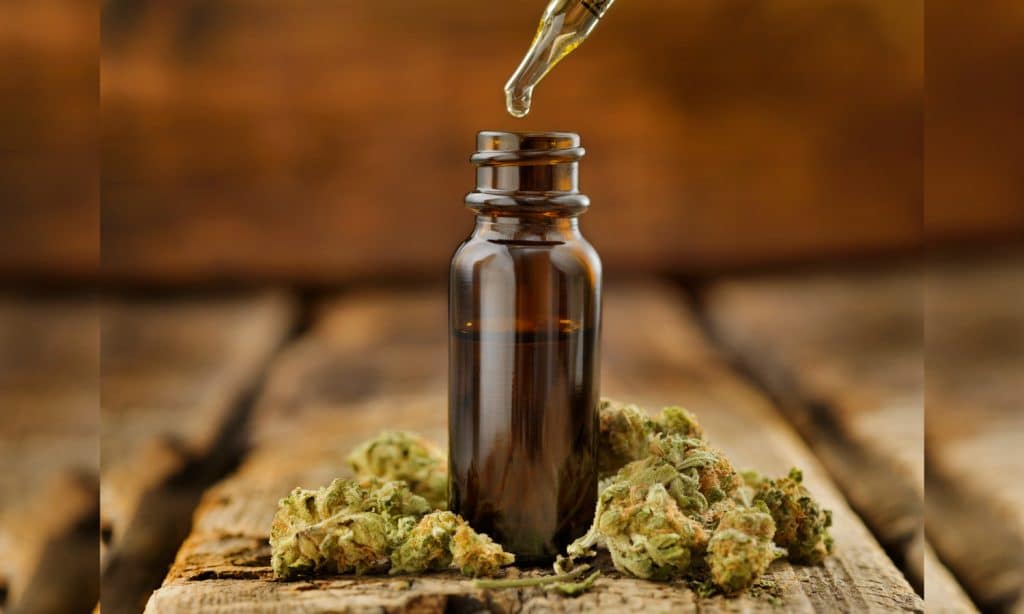
CBD is now widely available, so it’s imperative that you know how the compound  can interact with medication in a negative way.

CBD is one of the most wide reaching cannabinoids, finding placement in foods, beverages, gummies and supplements. Since the compound is available in so many shapes and forms, it’s very important to know if there’s a possibility of it interacting with other elements, especially when it comes to medications.

One of the aspects that has made CBD so attractive to consumers is the fact that it provides relief for plenty of symptoms while having minor side effects. This sets CBD apart from other medications, which can alter people’s lives in significant ways. But studies have shown that CBD has the potential of interacting with certain medications, altering the way in which our livers process foreign chemicals.

RELATED: Anandamide: How This Natural Cannabinoid Makes Us Happy

Healthline reports that a family of enzymes known as cytochrome P450 (CYP450) are in charge of converting foreign substances in order to eliminate them from the body. These enzymes are the ones that interact with cannabinoids, including CBD.

How Patients With Parkinson’s Disease Can Benefit From CBD
Photo by LauriPatterson/Getty Images

Specifically, this chemical is responsible for metabolizing around 60% of clinically prescribed medications. When CBD is in the body, the metabolization process is either slowed down or sped up, depending on the situation.

RELATED: Top 4 Predictions For Hemp And Hemp CBD In 2020

In some cases, this results in the medication spending more time in your body than necessary, messing with the dosage and possibly resulting in harmful or uncomfortable side effects. The reverse is also true. CBD can speed up the liver process, forcing your body to expel medication too quickly, which can render the drug ineffective.

Results like these prove that more research is necessary in order to understand the depths of CBD and its true medicinal capabilities, especially since many of the compound’s benefits appear when it’s taken as a supplement to other drugs. Since there are no clear answers at the moment, it’s important to be careful and to ask your doctor if CBD can be taken along with your medication.

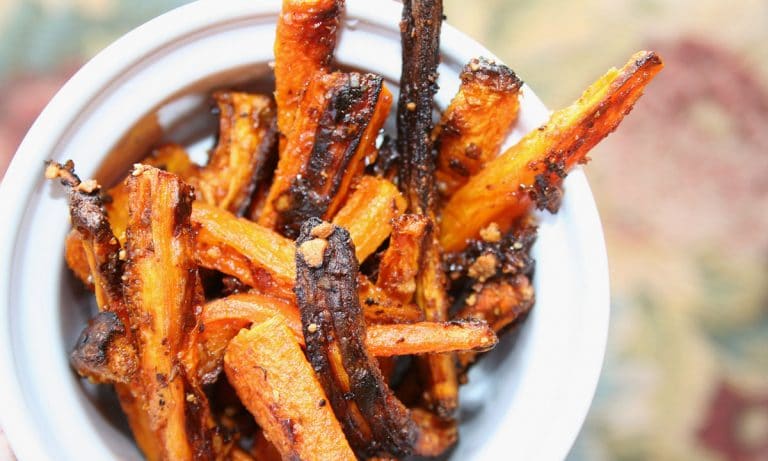
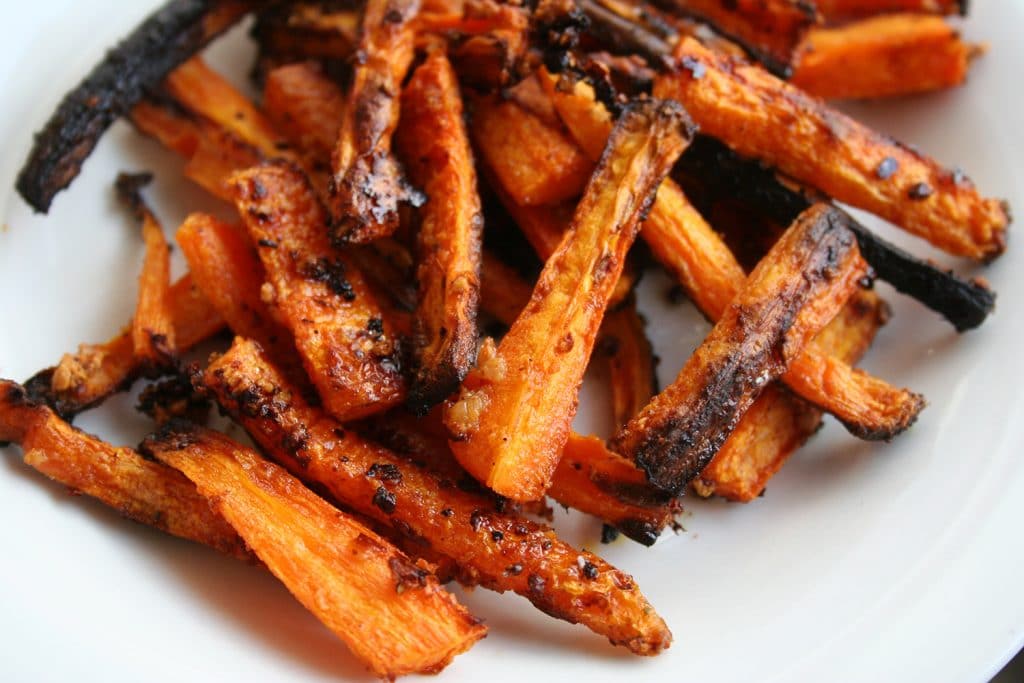
How To Make These Highly Addictive Cannabis Carrot Fries

These baked veggies don’t taste distractingly of marijuana, yet still have positively intoxicating effects.

If you love the flavor of sweet potato fries, you’ll love the sweet-savory flavor of oven-baked carrot fries. Drizzled with homemade cannabutter and seasoned with salt, pepper, and parmesan, they’re an earthy-salty-sweet snack that doesn’t taste distractingly of marijuana, yet still has positively intoxicating effects.

And best of all? They’re ready when you are. These simple (non-fried) carrot strips can be made in the oven in just about 20 minutes.

Photos by Jessie Moore

Cannabis Carrot Fries

6 servings

1. Preheat the oven to 400 degrees. Line a rimmed baking sheet with parchment.

Photos by Jessie Moore

2. Peel the carrots, and slice of the tips and ends. Slice each carrot in half, making for two short halves. Slice each half either in half or in quarters, to your desired “fry” size. Try to make the fries as evenly-sized as possible.

RELATED: Cannabutter: A Beginner’s Guide To Making The Best Ever

Photos by Jessie Moore

3. Place the carrots in a large bowl; drizzle with the cannabutter. Sprinkle with parmesan cheese, salt and pepper (be very generous with the salt, in particular) and any other seasonings you’d like. Mix by hand; make sure the carrots are nice and evenly coated.

Photos by Jessie Moore

4. Turn the carrots on to the prepared baking sheet, making sure they lie in a single layer. If any bits of the liquid are still in the bowl, drizzle it on top.

RELATED: How To Make Your Edibles Taste Less Like Weed

Photos by Jessie Moore

5. Bake in the preheated oven for 15-20 minutes, or until they are crisped to your liking (on the longer side if you like them less-soft on the inside; it’s OK if the edges even have a slight bit of blackening). For extra crispy edges you can turn on the broiler for the last minute or two of cooking; be sure to monitor the mixture carefully as they can progress from perfectly crisp to totally burnt under the broiler if you forget about them! Remove from the oven, and let cool briefly before enjoying warm.

A note on dosage

I “dosed” this recipe with 1 teaspoon of cannabutter per serving (3 teaspoons = 1 tablespoon). The strength of your finished product will depend on many factors, including the type of marijuana you used and how you made your cannabutter.

For more tips on proper dosage, visit our post: 5 Ways To Figure Out THC Dosage With Cannabutter.

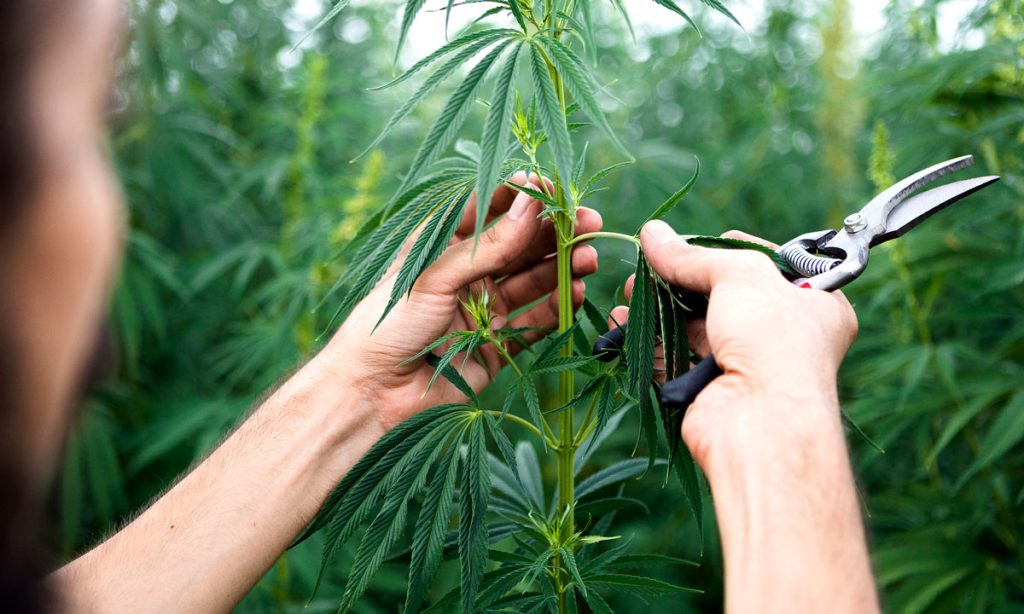
Top 4 Predictions For Hemp And Hemp CBD In 2020

The next few years will continue to be busy for hemp industries, and we expect there to be dramatic changes across the board, both good and bad.

2019 was, to put it lightly, an intense year for the hemp and hemp-derived cannabidiol (“Hemp CBD”) industries in the United States. We saw the implementation of the 2018 Farm Bill,  strongly worded statements by the Food and Drug Administration (“FDA”) that Hemp CBD was unlawful in many products followed (amazingly) by almost zero enforcement, the issuance of interim hemp production regulations by the United States Department of Agriculture (“USDA”),  and the development of hemp cultivation and Hemp CBD bans, regulations, and/or gray areas in nearly every state in the union (see the Canna Law Blog’s ongoing 50-state survey series that we post every Sunday).

Though 2019 was indeed busy, the U.S. hemp and Hemp CBD industries are far from normalized. The next few years will continue to be equally busy and we expect there to be dramatic changes across the board, both good and bad. Here are our top four predictions for 2020.

1. State Hemp Production Rollouts

For anyone who isn’t deeply familiar with the 2018 Farm Bill by now, it set up a system where states and tribes were required to come up with hemp production plans for approval by the USDA. Some states submitted plans to the USDA immediately, but it only began its substantive review after issuing its interim regulations.

RELATED: Don’t Believe Most Of What You Read About CBD Laws Online

As of today, numerous states and tribes have submitted or are in the process of submitting plans (you can see the actively updated list here), but only a small handful have actually been approved. In 2020, we expect that the USDA will approve most of the plans, or force states or tribes to change their plans up to comply with the USDA’s rules. Either way, state-level production is expected to kick into full gear under the 2018 Farm Bill.

Photo by Nastasic/Getty Images

2. FDA Enforcement

To date, the FDA hasn’t really done much about Hemp CBD products it claims are unlawful. Until late November 2019, all the FDA did (sometimes in concert with the FTC) was issue a small handful of warning letters to companies it claimed made unlawful products or advertised products in an unlawful way. But on November 29, it sent 15 warning letters simultaneously.

RELATED: FDA Issues More Guidance On CBD Products

While, to date, the FDA has not initiated any kind of public enforcement proceeding or litigation, the fact that it went from just a small handful of letters over 11 months to 15 in one day signals that the FDA is shifting into enforcement mode. 2020 may be the year where we see actual enforcement or litigation.

3. Hemp CBD Importation

Over the last few months, our hemp attorneys have fielded numerous questions about importing raw hemp or Hemp CBD products, mostly from South America and Europe, but even from Asia or Africa. Importation can trigger the jurisdiction of a number of agencies, including Customs and Border Protection, the FDA, and/or the USDA. I say “and/or” because importing products usually involve multiple agencies.

RELATED: Why Enforcement Is Not The Best Way To Combat The Illicit Market

For example, in this ruling, CBP noted that some Hemp CBD products were also subject to federal laws that are administered by the FDA. To boot, importation also involves the consideration of laws in the country from which products are being imported and, in some cases, international treaties. Notwithstanding the extreme legal complexity of importing hemp and Hemp CBD, we expect to see a huge uptick in 2020.

Photo by yavdat/Getty Images

4.  FDA Regulation of Hemp CBD

2020 may be the year that the FDA picks up the pace and does something clear with Hemp CBD. After all, Congress has been admonishing the FDA to speed things up for months now, and just recently an appropriations bill was signed that apparently directs $2 million to the FDA to finish its Hemp CBD regulations. Still though, at this point, FDA regulations on Hemp CBD are more of a hope or wish than an expectation. If they do come out in 2020, things we expect to see are testing requirements, packaging and labeling rules, advertising restrictions, Hemp CBD concentration limitations, etc. Hopefully, we will have more clarity in the next few months.

Griffen Thorne is an attorney at Harris Bricken. This article originally appeared on the Canna Law Blog

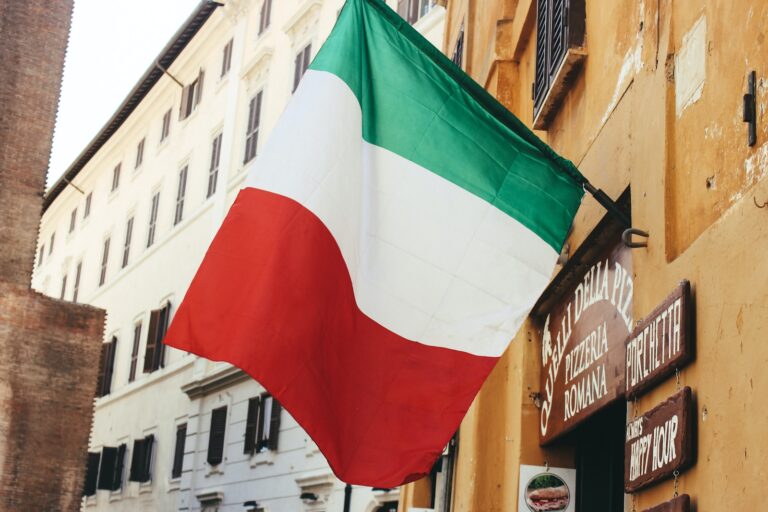
Italian Government Approves Marijuana Home Growing

Italy’s Supreme Court now protects the cultivation of small amounts of cannabis grown in people’s homes.

Over the holidays, the Italian Supreme Court ruled that it was legal to grow small amounts of marijuana at home for personal use. The court declared that narcotics laws should exclude “small amounts grown domestically for the exclusive use of the grower.”

According to the Independent, the ruling was approved on December 19, but it wasn’t announced until after Christmas. It has predictably caused outrage from conservative political parties and support from cannabis advocates.

“Drugs cause harm, forget about growing them or buying them in shops,” said Matteo Salvini, leader of the far-right League Party. Before leaving office in August, Salvini had been one of the most vocal opponents of cannabis, pushing for the closure of legal weed shops and looking to ban “light cannabis” products, which contain levels of THC below  0.6%.

RELATED: Italy Hopes To Nearly Triple Domestic Medical Marijuana Production

Italy's Ridiculous New Food Laws
Photo by Stocksnap via Pexels

Luca Fiorentino, founder of cannabis supply company Cannabidiol Distribution, expressed his relief and support of the Supreme Court’s ruling in favor of cannabis users. “It’s the end of a nightmare,” he said. “After Salvini’s witch hunt I had to fire 10 people and I lost 68% of my revenues.”

RELATED: Which Is Better, Indoor Or Outdoor Weed?

In Italy, the use of medicinal and industrial marijuana was legalized three years ago, but growing and cultivating the plant remained illegal. The Supreme Court’s ruling is credited to a recent case where a man was prosecuted due to the cultivation of two cannabis plants.

Although the Supreme Court’s ruling doesn’t specify what “small-scale cultivation” of cannabis entails, we can assume that growing a plant or two at home should fall under the protection of the law.

5 Things To Know About Cannabis In 2020

0

As taboos surrounding the plant erode, a more complete picture of cannabis is emerging, so here are five things to know as we start a new year.

As the cannabis landscape continues to change, notions and preconceptions about marijuana continue to evolve. This makes it challenging to know where medical professionals, the public, and politicians stand on the subject. As taboos surrounding the plant erode, a more complete picture of cannabis is emerging, so here are five things to know as we start a new year.

3-in-4 Physicians Support Marijuana’s Medicinal Use

The majority of physicians surveyed by the New England Journal of Medicine responded that they were in favor of medicinal marijuana, despite its use remaining verboten in most countries. While a clear majority of doctors are in favor of cannabis’s use for medical purposes, a deeper dive into the debate found that a larger majority still feel more research needs to be done. And still others felt that pot should be legalized, with patients allowed to make the choice for themselves — not physicians.

Both sides of the debate cite legitimate reasons for their position. Proponents say they have an obligation to alleviate suffering and have seen marijuana as a better alternative to narcotics, while detractors cite the problems of dosing, lack of science, and potentially harmful side effects.

Medical Marijuana Is Legal In 33 States And D.C.

Americans in 33 states and Washington D.C. now have access to medical marijuana, to varying degrees, as each state has set its own laws and regulations. Eleven states and D.C. also ring in 2020 with legal recreational marijuana. Complications in regulating cannabis, recreational and medicinal, has not been a smooth ride for every state; some like California are seeing less than projected tax revenue while struggling with a significant black market. Nevertheless, legal pot has created a burgeoning industry developing new ways to consume marijuana to serve a growing customer base.

RELATED: 4 Predictions For The Marijuana Industry In 2020

Saying 'Cannabis' Instead of 'Marijuana' Doesn't Influence Voters, Study Finds
Photo by Nastasic/Getty Images

Smoking Flower Is The Most Popular Way To Consume Marijuana

Ingesting weed the “old-fashioned” way — sparking up some buds either rolled up in a cigarette or smoked through a pipe — still remains the most popular way to get high, despite the availability of marijuana in a variety of forms. Sales and research data finds that flower remains king, but vape products have become popular enough to take second place.

Cannabis Is Now Mainstream Thanks Largely To CBD

2019 was the year CBD went mainstream, after the U.S. Farm Bill legalized hemp nationwide, effectively making CBD legal across the nation back in December 2018. This move ushered in a green wave, with consumer interest in cannabidiol exploding, as seen in Google search trends, large retailers adding CBD-infused products to their shelves, and even deep-red conservatives such as Fox News pundit “Judge” Jeanine Pirro and former House Speaker John Boehner joining the green rush.

RELATED: Are Marijuana Users Ditching Joints For Dabs And Vapes?

What You Should Know About CBD & Intermittent Fasting
Photo by Tinnakorn Jorruang/Getty Images

Signs Point To Alcohol Use Being Worse Than Marijuana

Alcohol is worse for you than marijuana. Thinking about ditching the traditional tipple for cannabis as a way to relax and unwind? That’s probably a healthy decision that your noggin will thank you for later. A study published in the journal Addiction and conducted by researchers at the Department of Psychology and Neuroscience at the University of Colorado Boulder compared the impact of alcohol and cannabis consumption on the brain and found alcohol more damaging than cannabis, which showed no change to white or grey matter.

How Long Does Marijuana Stay In Your Circulatory System?

0

If you’re a regular smoker and have a drug test coming up, the wisest thing to do would be to stop consuming cannabis for a minimum of 15 days before the day of your test.

Blood tests can be scary for regular marijuana users, especially when there’s a job or some sort of insurance on the line. While these sort of tests are becoming less and less common for all sorts of reasons, they are still required on special occasions. So, for how long does marijuana stay in the body?

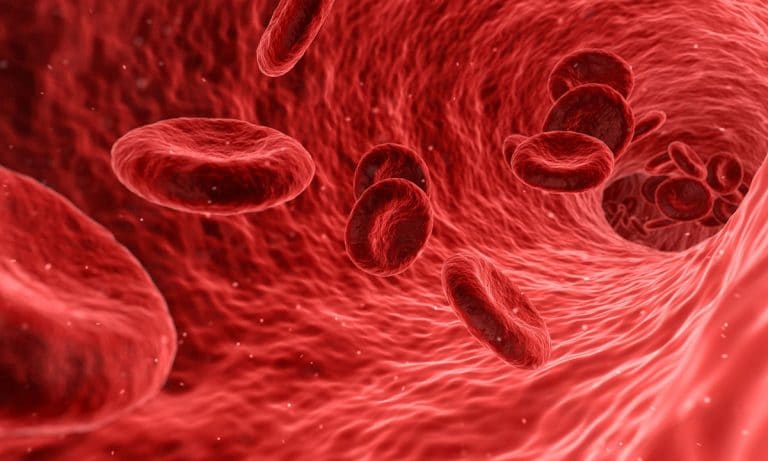
Depending on the quantity of what you smoke or consume, cannabis can stay in your circulatory system for a period that ranges from two to 15 days. As we all know by now, each body is different, and there are a few important factors that should be taken into account, like metabolism, the frequency and quantity of cannabis that was consumed, body mass index, and consumption method (edibles, smoking, etc.)

RELATED: How Long Does A Marijuana High Last? It Depends On A Few Factors

Occasional consumers can expect to be clean within a couple of days, but moderate and heavy users should expect a different story; cannabis can stay in their systems for about a week. If you’re a regular smoker and have a drug test coming up, the wisest thing to do would be to stop consuming cannabis for a minimum of 15 days before the day of your test.

neveda has the most expensive vape pens washington has the cheapest pre roll
Photo by Elton Clemente/Getty Images

Your body’s circulatory system is also affected by the way in which you consume cannabis. If you’re smoking, you can expect the THC to show up in your blood instantly. The good news here is that this method ensures that the drug will leave your body within a shorter period of time. When consuming an edible, it’s just the opposite. Once ingested, the cannabis will be processed by your liver, delaying the progress towards your bloodstream. When cannabis is ingested orally the drug will take longer to have an effect and it’ll stay in the body for a longer period of time.

RELATED: The Crazy Crap People Do To Pass A Drug Test

Cannabis is not only present in your blood, it’s also present in your urine and hair. Since there’s fat in these latter two, the THC will latch on and remain there for a period up to two months. Studies have shown that exercising causes dormant cannabinoids in your body pop back into your blood system, even if you’ve stopped consuming cannabis.

The most important thing you should know when asking yourself these questions is the kind of drug test you’ll be taking. Once you know, you can prepare accordingly, taking the necessary measures and precautions to ensure that you’ll get your body clean before you take it.

Anandamide: How This Natural Cannabinoid Makes Us Happy

0

Hey, no one said we were perfect. But there are some interesting aspects of the internal workings of the average individual — ones that make us seemingly less miserable — that we, perhaps, would never have found had it not been for the cannabis plant. One of those interesting aspects is called anandamide. It is just another piece of the puzzle collected over the past few decades that proves, without a doubt, that marijuana is medicine.

Anandamide is a natural cannabinoid produced in the human body. The compound gets its name from the Sanskrit word ananda, which when translated to English simply means bliss. Basically, this almost undiscovered compound, present in every singe person — even the most miserable of the breed — plays an important role in regulating mood. It also has responsibilities related to appetite and pain relief. But its primary role in a complex system is to try and make us happy and healthy. Good luck, right?

RELATED: 6 Things Everyone Needs To Know About Today’s Marijuana

We say “almost undiscovered” because scientists had no clue there was even a such thing as anandamide until they started trying to learn more about how THC (tetrahydrocannabinol) binds to the brain. It was during these studies that researchers discovered an unusual neurotransmitter manufactured in the brain that seemed to mesh perfectly with THC receptors. This compound was originally called arachidonylethanolamide, but, for obvious reasons, it was given the updated moniker of anandamide.

Without going full-blown science geek here (not that there’s anything wrong with that), let’s just say that anandamide is a part of the human endocannabinoid system that works to bring balance to our bodies and minds. In almost every facet of the emotional rollercoaster all of us are doomed to ride each and every day, this compound is doing everything it can to provide us with a sense of security and happiness. People with high levels of anandamide have been shown to be more fearless. Those with lower levels can suffer from mental disorders ranging from depression to schizophrenia.

RELATED: How To Control The Marijuana Munchies

So, it makes sense that we as miserable people need to do everything we can to increase the anandamide in our bodies. Otherwise, what hope do we have of ever living another happy day? The good news is there are ways to boost anandamide production in the body. Studies have shown that the feeling commonly referred to as a “runner’s high” is connected to anandamide enhancement.

Getting off the couch and engaging in some solid exercise is a good way to give the body an extra jolt of this all-important compound. Interestingly, consuming chocolate and cannabidiol (CBD) has also been shown to create an uptick in anandamide. So, give those a try. Or not. We don’t care.

Looking For Love In 2020? Try These 4 New Year’s Resolutions

0

Instead of aiming for marriage, how about setting smaller, more attainable goals, like going on two dates per week or striking up a conversation with 5 people this month?

If finding a significant other is one of your 2019 goals, there are several ways to increase your chances of finding that special someone. And (presumably) unlike your last date, they’re all cheap and relatively effortless. Here are four super simple tricks to increase your dating odds.

Smile

This may sound super cheesy, but it could actually help you land more dates. According to a 2017 study, researchers found that those whose resting faces seemed cheerful were judged as being healthier. Alex Jones, an expert in facial perception, wrote in The Conversation that:

“We discovered that faces look healthier when they are smiling, compared to a neutral expression, and that it doesn’t matter whether the faces are male or female. We also found that this effect increased with the age of the face: while younger adults look healthier when they smile, older adults look much healthier.

Photo by rawpixel.com

A smile was a more important cue than how old the face appeared to be, and more recent research has shown a happy expression is even more important than cues like adiposity or skin colouration. Scientific proof that a smile really is the best accessory.”

RELATED: 5 Common Online Dating Mistakes You Should Avoid

According to Jones, smiling basically sends a message to others that you’ll live a longer and healthier life by virtue of being optimistic and cheerful.

Set realistic goals

Instead of aiming for marriage, how about setting smaller, more attainable goals, like going on two dates per week or striking up a conversation with 5 people this month? As you cross these stepping stones, the larger goals will seem more doable.

Get out of your comfort zone

Swipe right on someone you may not otherwise consider. Just because someone is short, bald or a little out of shape doesn’t mean they aren’t worth your time. If nothing else, it’ll get you out of the house and into dating mode. Plus, your self confidence is likely to get a boost.

RELATED: Are You Sabotaging Your Love Life By Committing This Common Dating Sin?

The 4 Biggest Mistakes Men Make On Dating Apps
Photo by rawpixel.com

Give second chances

Did that first date not go so well? Don’t sweat it. Writing someone off after a single date could be a big reason why you’re still single. David Vermeulen, founder of elite dating app The Inner Circle, told INSIDER:  “Some people are really uncomfortable the first time they see somebody. You have to sell yourself in a way. Some people can do it really well, and some people can’t, but at the same time they’re obviously a nice person.”

Vermeulen says unless the first date was a complete disaster, you should give someone a second shot at romance.

Why Dry January Is Dumb And What You Should Do Instead

Dry January might add to such confusion giving the message that a month of abstinence does away with the need for regular breaks from drinking.

Alcohol Concern has thrown down the gauntlet to drinkers: can you manage a month without alcohol? The campaign, Dry January, aims to attract funding through donations, raise awareness of alcohol-related problems and educate people about the health benefits of abstaining from alcohol.

Aside from saving money, Alcohol Concern claims that abstaining will help you lose weight and improve your sleep.

There is no shortage of participants — more than two million people signed up last year, but is there any evidence that Dry January works?

RELATED: Can Legal Marijuana Fix America’s Binge Drinking Problem?

Gram for gram, alcohol contains almost the same amount of calories as pure fat, so abstaining for a month could reduce your weight, assuming you don’t compensate for the lost calories by eating more. Fat accumulates in the liver as a result of drinking. As little as two weeks abstinence can return your liver to good health, reducing the risk of alcohol-related liver disease.

As for improving sleep, there is clear evidence that you will get a better night’s sleep if you abstain from alcohol.

Photo via rawpixel.com

Things Have Been Getting Worse

So far so good, but the main ambition of Alcohol Concern is to change the drinking culture in the U.K. through events such as Dry January. Unfortunately, there is no evidence that Dry January achieves lasting change in consumption or in our beliefs and behaviour in relation to alcohol.

The campaign is premised on the idea of social contagion. If your friends start reducing their alcohol intake you are more likely to adopt the same behavior.

RELATED: This Is Why Your Wine Glass Is 7 Times Larger Than It Used To Be

Most people exhibit denial when asked how much they drink. This is demonstrated by the consistent difference between self-reported consumption of alcohol and total alcohol sales recorded by HM revenue and customs.

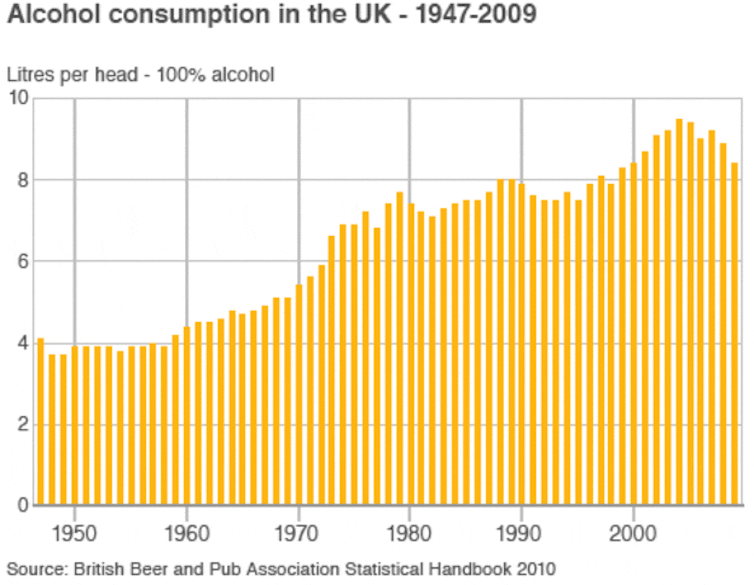
There has been an increasing trend in overall consumption of alcohol in the last sixty years. With estimates provided by the alcohol industry suggesting we are consuming 1.4 liters more of alcohol per person than we were in 1975.

As the long term trend in consumption has risen, so has the number of people developing alcohol-related health problems. Since 2009 there has been a 44% increase in those aged 50 and over accessing alcohol treatment.

More generally, alcohol costs every tax payer £120 a year through the one million annual hospital admissions attributable to its use.

If we discovered alcohol today, we would restrict and criminalize its use in the same way we have for drugs such as heroin. Objective examination of harms associated with 20 of the most commonly used legal and illegal drugs ranked alcohol as the most dangerous.

More Harm Than Good?

For people who have developed a dependency on alcohol, abstaining can produce a rebound effect. As a person experiences withdrawal symptoms such as anxiety, sleep disruption and restlessness — paradoxically the very things that many people find alcohol helps them overcome in the short term. This rebound effect could lead to more serious implications for heavy drinkers such as seizures and hallucinations. For this group Dry January may not be the right thing to do as it could cause more harm than good.

The consistent advice from the U.K. government is to have two dry days a week.The ConversationGuidance about alcohol has been difficult to communicate and there is generally confusion about safe levels of consumption. Dry January might add to such confusion giving the message that a month of abstinence does away with the need for regular breaks from drinking.

Ian Hamilton is a lecturer in mental health at the University of York. This article was originally published on The Conversation

Don't Miss Your Weekly Dose of The Fresh Toast.

Stay informed with exclusive news briefs delivered directly to your inbox every Friday.

We respect your privacy. Unsubscribe anytime.