Monday, May 11, 2026
Home Blog Page 1026

How Melding Marijuana Microdosing And Kundalini Yoga Can Heal The Brain

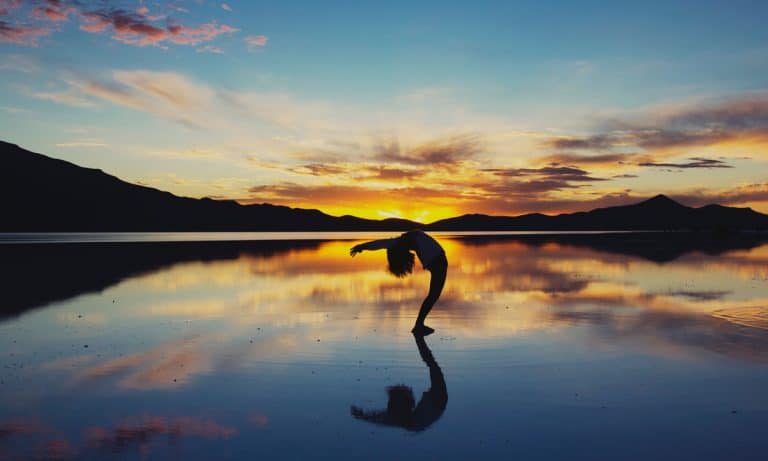
Becca Williams has found a path out of her perpetual lack of self-esteem and troubled past, and though it isn’t what might be considered traditional, she’s taking the gift and spreading it to others via Cannanaut: her own sort of Kundalini yoga matched with marijuana microdosing.

Though she does attribute much of the practice’s success to the breathing techniques, Williams also gives plenty of weight to “our beloved Spirit Plant” and the way that high-CBD cannabis interacts with mind, body and soul.

The notion of microdosing for healing is not new and not unique to cannabis. Silicon Valley is still famous for its LSD and mushroom microdosing, used for anything from creative processes to cluster headaches. Williams uses marijuana for “psycho-spiritual” purposes and leads her classes in that vein.

A reporter from Westword attended one of the classes recently and was immediately less skeptical once the breathing exercises commenced. She said she felt, “calmer and less anxious,” which makes a whole lot of sense. The breathing practices matched with the anti-anxiety properties of high-CBD cannabis calms racing hearts and minds, especially during a guided practice.

Williams found cannabis in college, where she immediately started self-medicating with the gentle herb. After growing up with alcoholic parents, she needed something to take the edge off, but it still wasn’t enough to bolster her self-esteem. Nor was prominent positions, one with NPR.

In fact, she says it was her lack of self-esteem that drove her to reporting, one of the most outgoing professions there is. It wasn’t until she took the nine-month course on Kundalini that she began to feel reborn. Unlike the other participants, Williams microdosed on cannabis for the entire course and believes that she got more out of it that way.

Another key to Williams’ work? Not trying to shut out “shadowy” problems. Dealing with emotions head on, breathing, yoga and calming cannabis, used sparingly, make up her recipe to living a fuller life. It’s how she spends her days now, helping other women out of their darker times or just simply elevating them, one toke and breath at a time.

Will It Ever Be Legal? A Deep-Dive Into New York’s Marijuana History

New York Governor Andrew Cuomo is pushing for officials to study the impact of legalizing marijuana in a manner similar to beer. If all goes according to plan, recreational marijuana in the Empire State could soon join eight other states and the District of Columbia.

Some believe that legal weed in New York would give the federal government no option but to consider legalizing the herb, the same as it has done with alcohol and tobacco. But it has been a long process getting to this point. One with an interesting history.

Marijuana was thrown into the pits of prohibition after propaganda campaigns sent White America into a downward spiral of fear. US officials like Harry Anslinger made it their life’s work to convince the nation that pot users (mainly jazz musicians at the time) were a scourge that should be dealt with law enforcement action. Key health officials in New York went against the grain of the government’s philosophy on this matter. These were the folks discussing “treatment,” rather than incarceration for those lost to the grips of “marijuana addiction.”

But marijuana was not shutdown so easily.

A decade later, weed had made its way from the jazz clubs into the white arts scene. Beat poet Jack Kerouac, who penned novels On the Road and Big Sur, reportedly got his first taste of marijuana while hanging around black jazz musicians. A report from the New York Times suggests that this Kerouac may have been introduced to the herb at Minton’s Playhouse in Harlem in the early 1940s. Jazz musician Lester Young is said to have been the person to turn him on.

While marijuana was being demonized, medical professionals were still not convinced the herb was all bad. In fact, the New York Academy published a report in 1944 discounting claims that marijuana was turning users into “murderous fiends.” The study showed that the average pot smoker “readily engages in conversation with strangers, discussing freely his pleasant reactions to the drug and philosophizing on subjects pertaining to life in a manner which, at times, appears to be out of keeping with his intellectual level.” Researchers, however, found no evidence that pot makes people want to kill.

Marijuana was grown all over New York in the 1950s. The New York Times says “Cannabis plants grew as tall as Christmas trees in vacant lots and underpasses in the Bronx, Brooklyn and Queens.” But eradication efforts were beefed up shortly after, eliminating 41,000 pounds of plants. These anti-marijuana activities eventually lead to some of the first pro-marijuana marches. Perhaps the most infamous was the one conducted by Allen Ginsberg in 1965 outside the Women’s House of Detention in Greenwich Village.

In the 1980s, marijuana was being discussed as an alternative treatment for AIDS. Martin A. Lee, the director of Project CBD, said at the time, “There’s no question: New York has played a very important role, historically, as a location for the cannabis phenomenon in the United States.”

Within the next decade, Mayor Rudolph W. Giuliani got busy trying to clean up New York. The police tactics that followed like stop-and-search disproportionately targeted blacks and Hispanics. Although Mayor Bill de Blasio said a few years ago that he was eliminating these types of racist policies, the practices never really changed.

So, will New York be one of the next states to legalize marijuana? It’s hard to say. But one thing is certain – what the state does next with respect to the cannabis plant will be considered either a cultural milestone or reflection of its lack of courage.

A Paleo Chocolate Valentine’s Day Dessert For Everyone

0

Valentine’s Day is poorly placed, agreed? You have basically been carb loading for the entire winter and then — BOOM! — it’s sausage-stuff yourself into some lingerie time. The New Year’s resolution has barely sunk its healthy hooks into your meat n’ cheese puppet bod, and you are already supposed to feel the desire to, slip into something a little less comfortable? Nah. Not quite the time, amiright? I am still trying to decide what lifestyle-diets are still “in” this year! (By the way, diets are no longer diets, they are “lifestyles” and I kinda really appreciate this; there is an air of promoted “balance” laced in the diets that are parading around as “lifestyles.” And hey, I am for it!)

There’s no such thing as a one stop shop in the dieting world. Everything diet-oriented must be catered to your person, it really must be your lifestyle in order for it to work. So, yeah, I will drink the Kool-Aid. I’M JUST KIDDING, IT IS MY ELECTROLYTE POWDER! NOT ACTUAL KOOL-AID! I GOT YOU SO GOOD!

Photos by Ryan Ross

The New Year gives everyone a great excuse to get excited about their health. Everyone seems to take a running start and then we all collectively and secretly burn out by the time Valentine’s Day sneaks up on us. It’s like all the healthy eating points we have collected gets spent all at once on National Candy Day and we fall off the healthy wagon and land directly into the chocolate crème brulee caramel ice cream cake. This is partially due to deprivation.

The New Year’s diet motivation is strong and we get a sort of all-or-nothing mentality when it comes to our “cheat” days. Also, there are just so many decadent and themed out options that seem impossible to refuse on such a holiday! All of the rich and romantical desserts are totally impossible to pass up! So we surrender to the chocolate lullabies of this Hallmark holiday and eat it all, all of it, nothing will be left , destroy all the evidence, tomorrow is a new day.

No matter where my rants take me, I always come back to a diet that promotes a lifestyle of balance. I am a firm believer in whatever encourages balance is best, and with balance comes indulgences as well as deprivations. This year, instead of falling off the health-wagon head first, why not split the difference?! Here is an extremely decadent cake for you and all the ones you love this Valentine’s Day — AND IT’S PALEO!!

The bit about the Paleo diet and lifestyle that I am drawn to is that it insists on very high quality foods. It’s not necessarily about eating only meat and berries, but rather cutting out refined sugars and heavily processed foods as well as a select genre of food items that can be tough on the digestion. Paleo meals will steer you away from Lectins, Phytic Acid and dairy products. Lectins are found in grains and legumes, soy products especially, and nightshades like potatoes, tomatoes and eggplants. Lectins can be hard on your digestive tract and can contribute to leaky gut syndrome. Phytic Acid occurs in grains, corn, nuts, seeds, and although nuts are allowed in moderation while eating the Paleo way, because they are not a full force anti-nutrient like grains that are so hard on the digestion, nuts and seeds come in handy while dining in paleolithic style, but sparingly. Dairy is the biggest doozy of all. We as a culture are obsessed with our calcium intake and Paleo literature insists that dairy is so acid forming to our bodies that a diet that is grain and dairy based will actually leach calcium from our bones, contributing to osteoporosis.  Amping up your mineral and protein intake from fruits, vegetables, meats and and other co nutrients will actually strengthen your bones, so you can take your dairy down from the pedestal if you plan on going Paleo.

Even if you feel this diet and lifestyle is a fad, out of style , or no longer relevant — or maybe there’s a hole in your  “Paleo, It’s a No-Grainer” tee — give it a whirl. It’s always in style to try new things, cook at home, and to eat less white refined sugar, no matter the time of year.

Paleo Cake

Serves 4-8

Photos by Ryan Ross

This is a simple recipe, albeit a tad high maintenance. Due to the textures that these ingredients create, there is a lot of “chill in the fridge” time that is necessary to pull this cake together.

You will need a 6 inch round cake pan.

I like making three layers for this cake (preferably one day ahead). If you have three 6 inch rounds, that’s awesome! If not, you simply must take the time and energy it requires to prep your pan, bake a layer, clean the pan, and prep the pan for a second and third time. It will l be worth it.

For the Filling and Frosting:

  • 2 – 2 1/2 cups of raw cashews, soaked for at least 4 hours, drained and rinsed
  • 1 lemon, juiced
  • 2/3 cup coconut oil
  • 1/3 cup raw honey
  • 1 vanilla bean, scraped
  • ¼ tsp. flaked salt
  • water

In a high power blender, add your cashews, lemon juice, coconut oil, honey, vanilla and salt. Start with adding enough water so that it almost covers the blender items. You want to err on the side of not enough water rather than too much, you may always add more as you go. Blend and blend until this mixture becomes very smooth, like pudding. You will need the help of a spatula and perhaps a bit more water. Taste as you go. Refrigerate your smooth smooth cashew mixture overnight. Use an electric hand mixer to fluff up the next day.

For the layers:

Preheat the oven to 350 degrees. Oil and line the bottom of your pan with a round of parchment paper.

  • 9 eggs
  • ¼ cup raw honey
  • ¾ cup coconut flour
  • 1 cup almond flour
  • 1 tsp vanilla extract
  • 1 tsp baking powder

Add eggs and honey to a mixing bowl and using an electric hand mixer, beat on medium- high until incorporated, about 1 minute. Stir in the flours, vanilla and baking powder. Divide the batter between your three pans, ( or go about this business baking one cake layer at a time if you only have the one pan.) Bake until just firm, about 12-15 minutes.

Photos by Ryan Ross

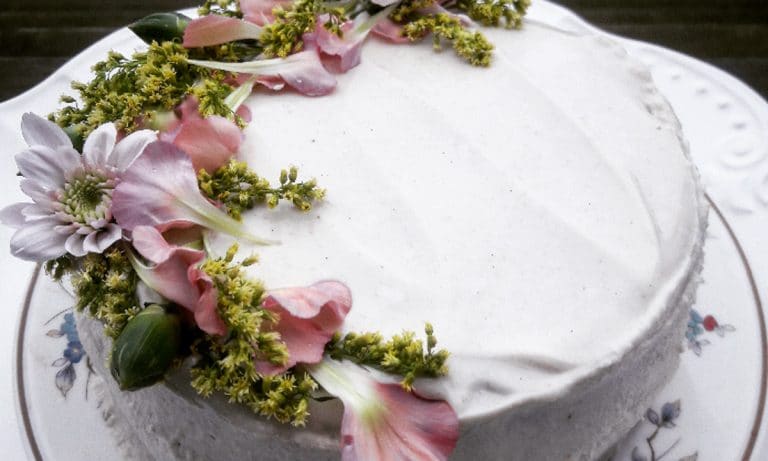
Once your layers are completely cool, slather some filling onto one cake layer at a time letting each layer sit in the fridge for 2 hours topped with its filling before stacking. Once your layers are all stacked, frost your cakes tops and sides. Keep in fridge at least more hours before transporting. Decorate and enjoy!

NOTE: For chocolate cake and filling, add ¼ cup raw cacao powder to your filling recipe plus 1 Tbsp. raw honey. And for the Chocolate Cake layers, omit ¼ cup of the coconut flour and add ½ cup cacao powder.


Here’s How Marijuana Can Help The Global Depression Epidemic

The World Health Organization announced last year that depression is now the world’s leading cause of poor health. More than 300 million people worldwide suffer from the affliction and the number of people with depressions soared 18 percent between 2005 and 2015.

“These new figures are a wake-up call for all countries to re-think their approaches to mental health and to treat it with the urgency that it deserves,” according to WHO Director-General Dr. Margaret Chan.

In the US, more than 16 million adults has experienced at least one major depressive episode in the last year, according to the National Institute of Mental Health. That accounts for 7 percent of Americans 18 and older.

Is marijuana a potential remedy for some suffering from depression?

Research suggests that cannabis may be a viable option for a number mental health conditions — including depression. More clinical studies need to be conducted to determine how effective cannabinoid therapy is in treating depression, but there is evidence that it works

Scientists at the University at Buffalo discovered that chronic stress may suppress the brain’s production of endocannabinoids — the naturally occurring compounds a human body creates that have similar chemical traits of cannabis.

Chronic stress, in turn, can lead to symptoms of depression. Introducing cannabis into the system helps restore the endocannabinoid system and may ease the debilitating symptoms of depression.

“Using compounds derived from marijuana to restore normal endocannabinoid function could potentially help stabilize moods and ease depression,” according to lead researcher Dr. Samir Haj-Dahmane said.

Research in Europe suggests that cannabidiol — a non-psychoactive component of marijuana — is effective in treating anxiety and depression.

This is not to say that the science is definitive when it comes to cannabis therapy and depression.  Some research suggests that chronic marijuana smokers are at a higher risk for depression, although a link between cannabis and depression has not been clearly established.

New Apple OS Will Allow Users To Turn Off iPhone Slowdowns

0

Apple plans to release the long-awaited iOS11.3 in the spring, which will feature a toggle that’ll allow users to turn off the software responsible for slowing down iPhone’s performance.

Apple fans have high expectations for the new OS and hopes it fixes issues brought about when the company admitted that they’d been slowing down older iPhones as a way of preserving battery life.

Via Learning English:

“We have never – and would never – do anything to intentionally shorten the life of any Apple product, or degrade the user experience to drive customer upgrades.”

Even though the slowdowns were suspected by users for a long time, the confirmation sparked outrage and lawsuits. Apple was criticized for deciding to slow down the phones before informing their customers about the devices’ power issues.

According to Bloomberg, the Department of Justice got involved, checking if the company actually broke any laws by keeping this information to themselves.

Following these events, Apple has been looking for ways to make amends by lowering their prices for battery replacements and presenting new features that’ll fix the phone’s problems. With this software update they’ll also add a tool that informs you of the phone’s battery health and let you know when it’ll need service.

While the controversy is still ongoing, Apple has demonstrated no signs of slowing down, advertising their Animojis for the iPhone X. These ads have been extremely successful, even popping up during programs such as the Grammys.

Meghan Markle’s First Royal Speech Was A Little Awkward

Meghan Markle and Prince Harry made their first official evening public appearance at the Endeavor Fund Awards on Thursday. Once again breaking protocol, Markle wore a black suit while Harry was wearing a light blue one.

During the event, Markle took the podium for her first ever royal speech, where she was supposed to introduce a speaker and hand out awards, celebrating the achievements of injured and sick service men and women who’d taken part in sporting and adventure challenges over the past year. This was a surprising move since Markle still isn’t part of the royal family.


While the first part of the speech ran smoothly, when it was time to introduce the speaker, Daniel Claricoates, there was an awkward moment as he fumbled through the speech papers, not finding his mark. 

She stood by awkwardly, smiling to the crowd, until she had to jump in and help him find his part, prompting laughs from the audience. When Markle thought Claricoates had it, she backed off, only to return to his aid when he kept on struggling. The awkward exchange lasted for about a minute.

Via Fox News:

While the speech was a little awkward by the end of it, you can’t blame Meghan for Claricoates’ fumbling. In the end, she was simply standing by him and tried to make the best out of a crappy situation.

This 6-Year-Old Girl Is First Patient To Receive Medical Marijuana In Texas

A small act of history occurred this week in Texas as the state had its first legal marijuana purchase. The customer? A six-year-old girl from central Texas, whose name is being withheld for privacy purposes.

The extract came from Knox Medical, located in the small town of Schulenberg and one of three medical marijuana companies that can legally operate in Texas. A nurse delivered the CBD extract to the girl, and then taught her how to properly take the medicine.

“Patients deserve medical relief and Knox Medical is proud to work with physicians and caregivers, and in close coordination with the Texas Department of Public Safety, to provide this medicine that exceeds the most rigorous standards for quality and consistency,” José Hidalgo, Knox Medical founder and CEO, said in a press release.

“This is a historic day for Texas and we will work tirelessly to uphold the trust and responsibility the state has placed in [our company],” stated Hidalgo in a press release. “For Texans suffering from intractable epilepsy, the wait for medical cannabis is finally over.”

The Texas Compassionate Use Act, the legislation which allows for low-grade THC cannabinoid sales for medical patients with intractable epilepsy, was passed in 2015. It has been nonviable until now, three years later, for those patients to receive that medicine.

The Opioid Crisis Is Forcing Open Minds About the Lifesaving Potential of Medical Marijuana

In 2016 alone, opioid-related deaths neared the number of American casualties in both the Vietnam War and Iraq campaigns, combined. Crazy numbers, somewhere around 63,000 men and women, depending on the source.

Prescription opioids, heroin and fentanyl continue to kill Americans at record pace. The Centers for Disease Control and Prevention reports that 91 Americans die each day from opioid overdose. The loss of life and productivity represents a $78.5 billion economic impact.

Even entire cities are weighing in on the opioid crisis by going directly at its source. They’re after the drug companies who ignited the opioid crisis in the first place. The cities of Everett and Tacoma, Washington have filed federal lawsuits against opiate drug companies, joining dozens of similar cases all lined up at the U.S. District Court in Cleveland, Ohio.

Opportunity For The Medical Marijuana Industry

Interestingly, the madness of the opioid crisis creates an auspicious opportunity for the cannabis industry. Here’s how.

The Perelman School of Medicine at the University of Pennsylvania found that states with medical cannabis are associated with a 25% reduction in average opioid overdose mortality rates. Secondarily, doctors in medical marijuana states prescribed 1,800 fewer painkiller prescriptions for patients a year.

Physicians and activists alike are using findings like these to highlight the cannabis plant’s powerful properties in the face of federal attempts to disrupt the legalization of it. The opioid crisis has, in fact, helped spotlight the role medical marijuana can play in reducing the spread of it.

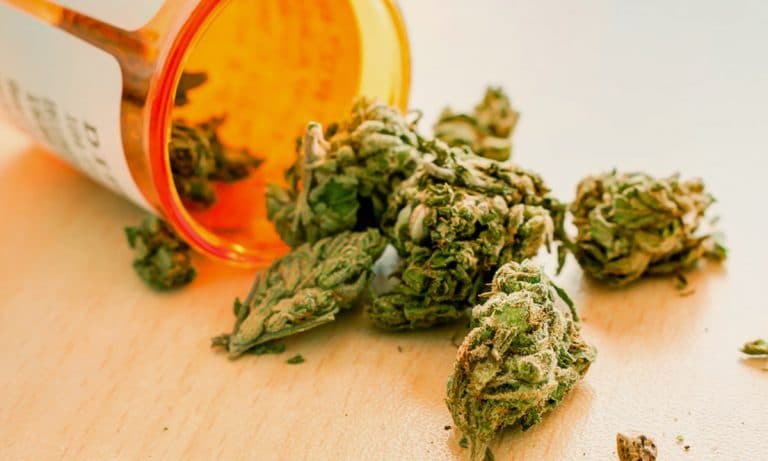
Compared to opioids, cannabis is less addictive both physically and psychologically. “Any drug which provides relief from pain may be habit-forming, but from a clinical standpoint, physical addiction to cannabis has not been proven,” Zeyead Gharib, CEO of Harvest Direct Enterprises related to me in an email interview. His company’s products, Weed Pillz™ (THC-Dominant) and Med Pillz™ (CBD-Dominant), are cannabis edibles that offer an alternative to patients seeking to manage chronic pain. The edibles also aid in preventing addiction and overdoses.

In addition to being less addictive and harmful than prescription opioids, cannabis causes less physical dependence and physical harm than alcohol, caffeine or tobacco; all of which are legal and enjoyed socially. Cannabis withdrawal is comparable to caffeine withdrawal in that it is generally mild and short-lived. In summary, cannabis can be habit forming but is generally considered to be less addictive than most drugs consumed both medically and socially.

“Cannabis has an addiction rate of around nine percent, and while cannabis may be addictive, we’re certain no one has ever died from a cannabis overdose, unlike many pharmaceuticals,” Jessie Gill, a registered nurse and founder of Marijuana Mommy told me in an interview. “Before I was a medical marijuana patient, I needed valium and opiates every six hours, plus additional medications. That meant there were dozens of deadly pharmaceuticals in my home. Now, all I have is a non-lethal cannabis and as a parent, that’s a relief.”

If marijuana can manage pain the same as or better than prescription drugs, it offers a less damaging solution with fewer short and long-term side effects on the liver, kidneys, heart and other bodily systems.

“The debate over opiates often overlooks those with a legitimate need for pain management,” Danny Sloat, founder of AlpinStash, a Colorado craft cannabis company told me. He began growing cannabis professionally after medical marijuana he purchased at a dispensary helped him overcome chronic stomach pains and debilitating illness, as well as complications from thoracic outlet syndrome and a non-cancerous brain tumor.

With medical marijuana, Sloat weaned himself off 19 prescription medications, including the opiate Fentanyl. He credits cannabis with saving his life.

“Too often opiates have been tossed at patients and touted as the only prescription form of pain relief, and yet cannabis is truly a holistic approach to pain management. Cannabis is the complete opposite to opiates in almost every way — it’s not addictive, has no overdose potential, helps relieve pain, decreases inflammation and inspires movement and activity, despite the stereotype to the opposite. Where opiates subtract from life, cannabis adds,” Sloat asserted.

More medical and addiction specialists see marijuana as an aid to drug withdrawal. It provides another weapon for rehabilitation as it manages pain on its own and because it can resolve withdrawal symptoms quickly and effectively.

Experiments on lab mice have found that the animals lose interest in opioids once they have been administered THC. While this is not the final word, it begs for more research to show how medical marijuana can reduce cravings and forestall relapsing.

Medical Marijuana Versus The Opioid Crisis.

As the opioid epidemic panics the nation, it only increases the market and justification for more research and application of medical marijuana as both a remedy and therapeutic solution for recovery.

“We’ve seen a significant decline in opioid overdoses in states that have legal cannabis programs,” said Emma Chasen, a cannabis ethnobotanist and Director of Education at Sativa Science Club, an organization that pools researchers and industry leaders to provide community education resources on a number of cannabis topics in Oregon. Voters there legalized medical marijuana in 1998 and in 2014 legalized recreational cannabis for adults. “Cannabis works,” she continued. “We just need more research to further prove it.”

Research into medical uses of cannabis is effectively blocked by federal law. Researchers at the Brookings Institution found that federal classification of cannabis as an addictive drug without medical use is “part of this layered system that impedes legitimate medical research on the benefits — and harms — that marijuana can have for a variety of ailments.”

“I expect the coming year will show an increase in prescriptions for this affliction and more knowledge in its efficacy,” Thomas Green, MD, medical advisor for The Fresh Toast told me. “My hope is that the DEA will change the schedule of the drug so that we can more easily study its use for opioid addiction.”

Solidarity And Shift

Republicans and Democrats alike are opposing a return to a hardline federal stance against the cannabis industry and are increasingly open to viewing drug addiction as a health-related issue better handled outside the criminal justice system. It’s one of the few issues both parties agree on.

At the same time, even some drug addiction professionals admit to the potential application of cannabis in delivering effective treatment. “Contrary to what other addiction treatment centers might think, we’ve seen first-hand accounts of Non-THC based CBD cannabis helping augment pain management in former addicts,” said David Likens, CEO at California-based Ascension Treatment Centers. “We have been misled about the power of this plant for over 70 years, and the use of cannabis as a harm-reduction tool for opioid addicts is something we need to add to our existing arsenal of recovery tools.”

As this thinking shifts, so too does funding allocation. With more solidarity and resources, 2018 may be a big year for the advancement of medical marijuana into every day, modern-day medicine.

This story was originally published in Entrepreneur.

5 Too-Serious Sex Toys That Will Make You Scream For All The Wrong Reasons

As their name clearly implies, sex toys are fun. Both words are great, and when paired together? Even better.

There are people that earn their living by coming up with sex toy ideas, all with the purpose of keeping the public interested and making them come back for more. Most of the time this works, but sometimes it doesn’t. While researching on this vast area of interest we encountered some sex toys that left us wondering: 1) why the hell does this even exist, and 2) why? oh god why?

Check out these 5 sex toys that’ll make you scream for all the wrong reasons:

A10 Cyclone SA

First of all, this is just a horrible name. It brings to mind a natural disaster or Arnold Schwarzenegger as the Terminator instead of something that’s supposed to be sexy and intimate. The Cyclone was designed in Japan and was advertised as a sex toy that’s works more like a home appliance, because that isn’t creepy at all. The device looks like a big cylinder and can be plugged into your computer or your phone. It also has 7 different speeds. Again, creepy. 

TimeToSquirt

TimeToSquirt is a wrist-watch that was probably designed by some creep to provide a guiding hand when it comes to women and their squirting orgasms.  Fear not, that’s not all the service TimeToSquirt provides; by purchasing the gadget you’ll also gain access to the ultimate guide that explains the necessary techniques for giving someone a squirting orgasm. There are no words for expressing how bad this is.

LovePalz

We’re so over the names. All criticism aside, this is actually a pretty impressive piece of technology that has two parts that work in sync and complement each other. The male part is called Zeus and the female part is called Hera (not very original). By having a partner stimulate one piece, the other one will react to it. It’s okay if you don’t understand this description, we have a video, porn-y music included.

Glance

So this is technically not a sex toy but an app meant to be paired up with the Google Glasses, allowing the person to see sex from their partner’s perspective. Who funded this?

You can even pair your phone with the app so that you can see the sex you’re having from the angle of the device’s camera. So basically, Glance expects you to wear glasses and to use your phone while your having sex. Great idea.

Hotdoll

Hotdoll isn’t exactly for humans but it is a sex toy. For dogs. The makers pride themselves on creating the first sex doll for man’s best friend. Please leave them out of this. Please.

ตุ๊กตาเผื่อสุขภาพของน้องหมา

A post shared by อู๊ด อภิสิทธิ์ (@oode_apisit) on


There’s A Reason Why Your Body Stores Fat In Certain Places

We all have an area in our bodies that, no matter how hard we work on it, we’ll never be able to truly change. Maybe it’s your thighs, or your butt. Sometimes it’d be great if we could just grab that extra fat and move it to a place were it looks better, like your boobs.

The reality is that, biologically, it’s really hard to change the nature of your body. If you’re a person who normally packs weight on their thighs, you’ll still be that person in the future, no matter how many squats you do that target that particular area. According to Popular Science, this is due to hormones, specifically, sex hormones. We should’ve known; it’s always about sex.

Testosterone and estrogen are the biggest forces behind fat storage, and they’re the main reason why men and women tend to have different body shapes. Biologically, females tend to hold more fat in their butts and thighs, while males store fat on their stomachs – one of the main reasons why they tend to have cardiovascular problems.

Turns out that big bellies pop up when males have low testosterone, which is why dads always have such, well, dad bodies. As they age, with their testosterone levels dropping naturally, it becomes harder and harder for them to get rid of those extra pounds in the stomach. It’s also interesting to know that high levels of testosterone and estrogen promote leanness, which is why young people have an easier time when it comes to staying fit.

The easiest way to picture these changes is to think about puberty. Kids all kind of look androgynous until they grow into teens and their hormones hit, making things go crazy. During this period females develop their hips and thighs, and males develop tons of hair and a deeper voice. It’s only a short while until hearts start breaking. Oh, hormones.

Don't Miss Your Weekly Dose of The Fresh Toast.

Stay informed with exclusive news briefs delivered directly to your inbox every Friday.

We respect your privacy. Unsubscribe anytime.