Sunday, May 10, 2026
Home Blog Page 1054

Why Sean Hannity Called CNN The “Fake New Cannabis News Network”

During CNN’s New Year’s Eve coverage, the network cut to anchor Randi Kaye who was stationed in Denver, Colorado. Kaye rode the Cannibus, a party bus filled with marijuana enthusiasts, and showed off a gas mask, explaining to fellow anchors Anderson Cooper and Andy Cohen how it works.

This was a strategic decision as the network wanted to show how marijuana enthusiasts celebrate the ball dropping, an event that is typically overflowing with alcohol. However, at one point during the broadcast Kaye was shown holding a burning joint, given to her amidst a “puff, pass, and paint” party, though she never partook on camera.

FOX News took extreme umbrage with this, as you might expect. One segment asked if cannabis legalization was inevitable or “a blight on the nation” while Sean Hannity called CNN the “fake news cannabis news network.”

Anderson Cooper then stopped by Stephen Colbert’s Late Show to explain CNN’s action with a rather simple defense.

“First of all, it’s legal in Colorado. We are grown adults and she did not smoke obviously. She was just in the environment,” Cooper said, referring to Kaye. “The whole thing surprised me as much as anyone else.”

Colbert also questioned Cooper if he’s surprised at the spreading legalization of marijuana and he replied, “”Not really. Think about California. I mean it makes sense.”


Jimmy Kimmel And Stephen Colbert Slam Jeff Sessions For Cannabis Crackdown

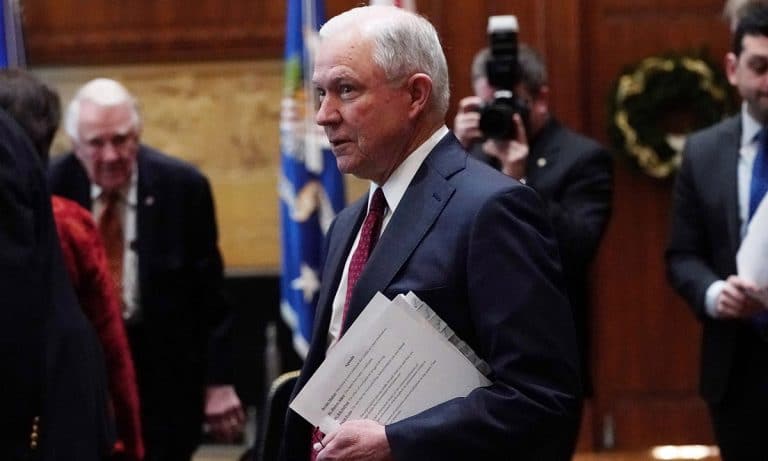
With Attorney General Jeff Sessions rolling back the Cole Memorandum, an Obama-era policy that discouraged federal prosecutors from targeting those in states with legalized marijuana, amidst a time of more potent political turmoil, it’s caused many to question why. Why is Sessions so obsessed with marijuana policies?

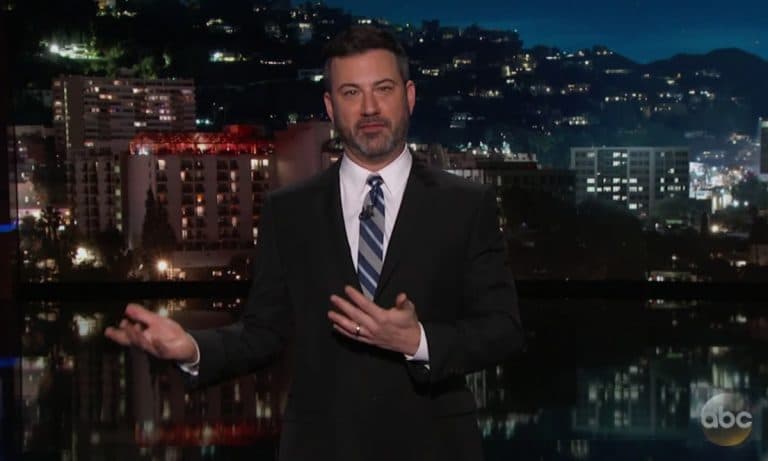
Luckily, in the face of absurdity, we always have comedy. “Late Night” briefly targeted Sessions’ decision, including Jimmy Kimmel who tried to answer that question on everyone’s mind.

“No one can figure out why he’s doing this,” he said. “With all that’s going on, this is like locking someone up for retransmitting baseball games without the consent of Major League Baseball. It’s very minor. But something about it seemed fishy to me, and I want to connect the dots for you so I can tell you what’s really going on here.”

We won’t spoil the fun, but let’s say it involves our ongoing theory that Jeff Sessions might be a Keebler Elf.

Stephen Colbert also joined the cajoling, questioning Sessions’ decision even though a task force Sessions himself had commissioned advised him not to alter the policy.

“Come on, Jeff, you’re the states’ rights guy,” Colbert said. “Would it help you if they smoked the weed out of a rolled-up Confederate Flag? This new directive from Sessions can mean only one thing: He still doesn’t know that white people smoke pot, too.”

Colbert also referenced Vermont Senator Bernie Sanders’ statement, where he told Sessions that marijuana is not heroin. This was followed by Colbert resurfacing Sessions’ comments that marijuana is “only slightly less awful” than heroin. To which Colbert replied: “They’re very close. You take heroin, you die; smoke marijuana, you will die laughing at Jeff Sessions.”

Marijuana-Positive Things From Jeff Sessions’ Announcement

Did Attorney General Jeff Sessions just reignite the 47-year-long, $1 trillion War on Drugs? Or did his surprise decision to rescind cannabis-friendly federal guidelines accelerate the end of marijuana prohibition? The answer depends on who you talk to. We are going to look at marijuana-positive things from Jeff Sessions’ announcement.

“In a weird way, I think the Sessions move might actually help us by accelerating efforts to change federal marijuana laws,” Tom Angell, the chair of the advocacy group Marijuana Majority, told the Washington Post. “Whereas until now we’ve sort of been operating in a gray area, I think it’s now clear that a permanent resolution is needed. That is reflected in the fact that so many lawmakers from across the political spectrum are pushing back hard right now.”

After the knee-jerk reaction of doom and gloom immediately following Thursday morning breaking news, most lawmakers, entrepreneurs and industry insiders were taking it in stride.

Mark A.R. Kleiman, a professor at New York University, said very little would change following the policy change. Even if Sessions wants the Department of Justice to chase marijuana businesses, the federal government does not have the money or staffing to do so.

Another factor to consider is the will of the American people. The floodgates of legalization are spreading from sea to shining sea and more than half of the states have medical marijuana programs firmly in place.

A fresh national poll released Friday by Pew Research Center shows unprecedented public support for legalization. According to the survey, 61 percent of Americans say the use of marijuana should be legalized. The percentage of legalization supporters has nearly doubled from 2000 when 31 percent were in favor.

For decades, cannabis has been the most commonly used “illegal” substance in the United States. But a growing number of state lawmakers and a substantial portion of voters would like to see a change in policy. According to Kleinman, the federal government is now back in a position that it can’t enforce. “Cannabis prohibition is over,” he said. “We are where we were with alcohol in 1930.”

Even in California, where legalization is barely 1oo hours old, retailers are chill. For Southern California-based MedMen, it’s business as usual. Daniel Yi, the company spokesman,  said the “reality on the ground” has not changed. Yi stated, “It has created more uncertainty, but it hasn’t created certainty that there will be a crackdown.”

So where do we go from here? Take a breath. And then read what is already happening and what is likely to happen in the near future:

States Fight Back

In virtually every state that has allowed some form of cannabis use, the governor’s office and state lawmakers have fired back against Sessions. “I think it will be the case where the bark is going to be worse than the bite,” said Colorado Gov. John Hickenlooper.

State lawmakers from Massachusetts to California made similar comments. At least 15 Democratic gubernatorial candidates and current governors ripped into Sessions’ move, including Washington Gov. Jay Inslee, chairman of the Democratic Governors Association.

And it’s not just because legalization is wildly popular among their constituents. It’s all about the money. In 2016, the cannabis industry generated $6.7 billion in revenue. The industry already employs nearly a quarter of a million people. States struggling with budget issues love having this new stream of tax revenue. And they love the jobs. No way are governors or state legislators going to give up the green.

Voter Turnout

Look for increased voter turnout. Typically, off-year elections draw much fewer voters. But Sessions may have stirred up a hornet’s nest with his move. As mentioned above, marijuana legalization is a winning issue for nearly every politician. Every single poll demonstrates growing acceptance and approval of legal marijuana.

Sen. Mark Warner (D-Va.) said the move “would seem to be the absolute opposite direction of where the country’s headed and one more example of this administration being completely out of step with where both Americans are headed and, for that matter, Democratic and Republican state legislatures.”

Democratic National Committee spokesman Michael Tyler called Sessions’ decision “morally bankrupt and economically stupid.” If a candidate, especially a Democrat, is looking to fire up their base of young, educated voters, this issue is a no-brainer.

Congress Forced Into The Conversation

One way to look at Thursday’s news is that Sessions is merely following established federal law. Yes, the law is ridiculously flawed and a social justice nightmare. But law is the law, Sessions’ supporters say.

And they would be right. Congress establishes laws in this country, and many feel the time has come for congressmen and senators to do the hard work and write a sensible bill. And it could come from either side of the aisle. “I don’t see this as a partisan issue,” said Angell, of the nonprofit Marijuana Majority. “Either party that wants to latch on to this will find that it will benefit them. The opportunity is there.”

Rescheduling Back On The Table

One thing Congress can do is push for a rescheduling of cannabis out of Schedule I. The criteria for substances in Schedule I are as follows: no currently accepted medical use, high potential for abuse, and lack of accepted safety for use of the drug under medical supervision. These substances include marijuana, mescaline, psilocybin, peyote, heroin, and LSD.

Topsy-Turvy Cannabis Stock Prices

Investors will be more nervous about investing in pure cannabis businesses such as farms, distribution companies, edible manufacturers and retail outlets. Landlords may get skittish. Cannabis stocks plummeted following Sessions’ announcement and many potential investors may now stay on the sidelines.

“I think most people in the industry would say it’s going to continue to grow in the right direction,” Nick Kovacevich, CEO of cannabis packaging company Kush Bottles, told MarketWatch. “Are people going to pull their money out? Yes, some will, so there should be some concern about the industry’s ability to raise capital. But if companies can’t raise $10 million and can now only raise $1 million, it just means that company will grow slower. The momentum is already there.”

Black Marketeers Double Down

States have benefited from a tax revenue windfall since legalization, and the revenues will continue to grow as long as the states are allowed to legalize and regulate the market. Without regulation, you essentially open the door wide open for black marketeers to re-enter entire states.

In California, many of the illicit farmers in the famed Emerald Triangle, have turned a cold shoulder to entering the legal market. With Sessions’ announcement, those in the black market can now maintain their power and wads of cash.

A Fight For Federalism

As Charles C. W. Cooke writes in the National Review: “There is no good reason for Washington D.C. to have a view on this. If Colorado or Oregon want to legalize weed while Mississippi and Utah ban it, that’s fine. In fact, that is how the country is supposed to work. The United States is a collection of . . . well, of states; it is not a giant centralized democracy with fifty regional departments. Congress should make it a priority to get the federal government out of this area, and to let the states, not the attorney general’s fealty, determine which rules are best for their citizenries.”

You will no doubt be hearing a lot about states’ rights over the next few months. Hopefully it will be correct there was some marijuana-positive things from Jeff Sessions’ announcement

What Is Marijuana’s THCA And What Does It Do For You?

Cannabis doesn’t actually produce THC or CBD. The plant produces all cannabinoids in an acid form. Instead of making THC and CBD directly, it synthesizes tetrahydrocannabinolic acid (THCA) and cannabidiolic acid (CBDA) from their cannabigerolic acid (CBGA) precursor.

THCA is not psychoactive—it does not activate CB1 cannabinoid receptors in the brain. In order to make psychoactive THC from THCA, one needs to heat it. This can be done by smoking or vaporizing raw flower, baking edibles, or heating cannabis in a process known as decarboxylation. When smoking cannabis, it is estimated that more than 95 percent of the THCA is converted to THC. If so, a cannabis smoker might inhale the small amount of remaining THCA, which could also impart a therapeutic effect.

According to several doctors, THCA shows great promise in the treatment of epilepsy. Preclinical research indicates that THCA may be anti-inflammatory and may reduce nausea. One of the most signficant features of THCA is its apparent ability to work at very low doses. The therapeutic potential of THCA is all the more noteworthy given that this compound is more readily available than THC or CBD because of the ubiquity of the raw marijuana plant.

Clinical Use Of THCA

Clinical experience is the best place to start. Dr. Dustin Sulak and Dr. Bonni Goldstein have both reported on the use of THCA in the treatment of patients. In a recent publication, Sulak, Goldstein, and Dr. Rubel Saneto describe four case reports of patients using THCA along with other treatments (conventional anti-epileptic drugs as well as cannabis). Among these patients, small doses—around 0.1-1 mg/kg/day THCA1—were used, corresponding to 0.01 to 0.1 percent of the patient’s body weight in THCA. For a child weighing 50 pounds, this entails between 2-23 milligrams of THCA in a day.

By contrast, studies with Epidiolex, a pure (99.5 percent) CBD sublingual spray, start at a dose of 5 mg/kg/day and usually increase to 25 mg/kg/day. The aforementioned doses of THCA are 10-100 times lower.2

THCA is typically administered along with other components of cannabis in a tincture via an under-the-tongue dropper or spray. Sulak’s article indicates that higher doses of THCA did not generally improve the response, with one patient getting worse after increasing the dose of THCA. Sulak also found that specific terpenes along with THCA in a given cannabis strain can contribute signficantly to the anti-epileptic effect. (Linalool, in this case, was needed for the anti-epileptic effect.)

Dr. Goldstein told Project CBD that daily consumption of 10-20 mg. of THCA was effective in reducing pain in some of her patients with arthritis and irritable bowel syndrome. For one patient with Alzheimer’s disease, THCA improved cognitive symptoms and allowed the patient to reduce the use of other drugs.

Dr. Sulak also spoke with Project CBD, saying that a higher dose of 2 mg./kg. of THCA combined with THC is sometimes effective for seizures, pain, and arthritis. For neurological, about 1 mg. of THCA and THC used 2-3 times a day has helped some of his adult patients. In one teenager, a very low dose of THCA prevented severe refractory migraines.

Anecdotal reports from other sources indicate that a 10:1 CBD:THCA ratio can be effective for some epileptic children when a high CBD/low THC cannabis oil preparation does not deliver satisfactory results. One seven-year-old patient, weighing 42 pounds, has been seizure free for the past two-and-a-half years since he’s been on a dosage regimen of 50 mg./day of CBD and 10 mg./day of THCA.

THCA In The Lab

Thus far, preclinical research into THCA has been very confusing. Erin Rock and other scientists at the University of Guelph in Ontario have demonstrated that low doses of THCA—about 10-100 times lower than the requisite dose of THC—prevent nausea in rats. In addition, they found that THCA synergizes with CBDA, which is also a potent antiemetic compound. It is possible that the anti-nausea effect of smoking cannabis is partly attributable to the small amount of THCA that remains when cannabis is burned.

Curiously, THCA’s effect in the Guelph study was prevented by blocking the CB1 cannabinoid receptor. This is surprising, given that THCA isn’t known to bind to CB1 and doesn’t cause psychoactive effects like THC does when the latter binds to CB1. Yet Rock et. al. did not observe any effects from THCA that they could attribute to central CB1 activity. A possible explanation for this finding is that Rimonabant, the experimental drug they used to block the CB1 receptor, may have inhibited THCA’s effects through a different channel or receptor, such as GPR55 (which is activated by Rimonabant). When asked by Project CBD, Dr. Rock indicated that they are uncertain as to how THCA prevents nausea, and that it may very well be an off-target or peripheral effect.

A study by Rosenthaler and a group of Austrian scientists surmised that THCA has a greater binding affinity to the CB1 receptor than THC does. It may be that this study was flawed (their data also suggested—likely incorrectly—that CBN, a breakdown product of THC, binds to CB1 more potently than does THC). But it also might be the case that THCA acts primarily on peripheral CB1 receptors outside the brain and central nervous system. The main difference between THCA and THC could be related to how these compounds are distributed throughout the body. Another explanation might derive from an inconsistancy between two molecular isoforms of THCA—THCA-A and THCA-B—which could give rise to different results (see sidebar).

How Does THCA Work?

So how does THCA confer its effects? Through which biochemical channels does THCA act? The only receptor to which THCA is known to potently bind is TRPM8—the receptor that makes mint feel cold. THCA is a strong antagonist of TRPM8. But there is no research to indicate that inhibiting TRPM8 prevents nausea or reduces seizures, so this does not explain the clinically observed effects of THCA.

At higher concentrations, THCA also may activate TRPV4, a heat-sensing receptor, and TRPA1, a receptor that mediates the edgineß of spices such as mustard and cinnamon.

THCA may also convey therapeutic effects by inhibiting the metabolic enzyme MAGL that breaks down the endogenous cannabinoid 2-AG; this would result in higher levels of 2-AG, which activates both CB1 and CB2 cannabinoid receptors throughout the brain and body.

In these preclinical tests, THCA was about 10 times more potent when used as a whole-plant extract rather than as an isolate.4 But this evidence is based on only a few studies performed in cell cultures, which does not neceßarily translate to clinical experience.

Other data from preclinical work suggests that THCA may be an anti-inflammatory compound that protects against cancer, but this work is an unconvincing explanation of clinical reports. One study on THCA and breast cancer required a high concentration of THCA, about 1000 times more than the concentration in the blood of Dr. Sulak’s patients. Another study suggested that THCA was a much weaker antioxidant than THC or CBD and that THCA is only slightly neuroprotective at similarly high doses. Two studies on inflammation revealed that THCA does not inhibit COX-2, an inflammatory enzyme blocked by ibuprofen and aspirin, and high doses of THCA were required for an anti-inflammatory effect.

The fact that doctors and patients are reporting significant health-positive effects from THCA at very low concentrations underscores that there is much more to understand about THCA. The properties of THCA indicated by preclinical research may be relevant to cannabinoid medicine in the future, but they do not explain the remarkable results with low doses of THCA that patients are experiencing today.

This story originally appeared on Project CBD.

Medical Marijuana For Your Dog: Is It Safe?

Humans and the dog. We love them so! And we love our weed. But it’s not necessarily the case that our pets should love our weed. That’s not how the transitive property works.

A recent New York Times article shined a spotlight on pet edibles, a growing niche within the burgeoning medical marijuana industry. It includes testimonials from dogs, cats, horses, pigs, even skunks that have found relief in cannabis for a kitchen-sink list of maladies: arthritic pain, glaucoma, seizures, anxiety. Or rather—of course—testimonials by owners who believe their pets have found relief.

And that’s the rub. The animals cannot speak for themselves, so, as loving and responsible pet owners, we need to take extra care not to project our hopes or desires onto them.

It would be nice if we could rely on science to guide us here. But there is almost no reliable information. There are no clinical studies of cannabis on domesticated animals (or wild ones, for that matter). What medical literature we have is comes entirely from veterinary reports—and there’s not even many of them. So it’s not surprising that vets are divided on this issue.

They can even disagree over what may seem to be the basic question: Is marijuana poisonous for pets? While the ASPCA states that THC is toxic not just to dogs but to cats and horses as well, a toxicological brief from 2002 could find no quantified lethal dosage. In fact, one San Francisco vet reports treating canine patients who consumed “several pounds” of whole plant cannabis and survived just fine.

If we can’t even agree on the relatively simple issue of toxicity (a pet is either dead or not dead after eating a cannabis cookie), how can we hope to make more subjective calls—Is my cat riding a mellow? Is my ferret bad-tripping?

One of the few available studies examined 213 cases of “marijuana toxicoses” in dogs and lists the observed symptoms. Most dogs will exhibit depressed activity and clumsiness. Some will exhibit tremors, disorientation, hypothermia, excessive salivation, loss of appetite, vomiting, incontinence, whimpering. At least to my eyes, most of these don’t look like signs of enjoyment.

Now, all those symptoms are likely caused by THC. The cannabinoid CBD, on the other hand, produces no psychoactive effect—at least in humans. Again, we simply don’t know what it does to animals.

And here’s one more depressing fact: From a medical perspective, it’s absurd to speak of “animals” as a class. Ohio State University veterinarian Sarah Moore described to Popular Science the massive amount of research that would have to be conducted before we could have a guaranteed-safe cannabis med for pets. Challenge one: cats (of course!) They represent “the pinnacle of the weird metabolism of drugs and chemicals,” and there’s no telling how they might react. Then herbivores would metabolize differently from carnivores, and birds differently from mammals, and mammals differently from reptiles. And so on. “Really,” Moore concludes, “you need data for every species.”

In the meanwhile, here’s an interesting finding about impact of increasing medical marijuana use and reports of canine marijuana poisoning. A Colorado study from 2012 found that in a five-year period after the state approved medical marijuana, reported cases of marijuana toxicosis in dogs jumped four-fold. On the other hand, the number of humans who registered for medical weed over the same period shot up 146 times. So, if we want to be optimistic, we could say that canine marijuana poisoning is about 142 times better than it could be.

4 Of The Weirdest Sex Injuries ER Doctors Have Ever Seen

Sex is normally associated with happy thoughts—some sort of pleasure and a good time—but sometimes things can get crazy and maybe even require medical attention.

While some sex-related injuries are understandable, like a rug burn, some of the following injuries will make you wonder about the meaning of life. They’re not okay.

What all of these injuries have in common is that they’re all embarrassing, a fact of that physicians are well aware. Men’s Health interviewed doctors and gathered the most embarrassing and shocking sex injuries.

Their answers will definitely shake you up, check out 5 of our favorites:

Genitals Burned Because Of Spicy Food

https://giphy.com/gifs/NXdChKzdXuCv6

The title pretty much says it all. Gabe Wilson, M.D., from Texas, explains that he once treated a woman who had mild burns on her genitals because her partner had eaten spicy food right before giving her oral sex. Bad idea.

Broken Penis

https://giphy.com/gifs/broken-marissa-tomei-may13i5UI9aFO

Robert Hartman, MD, explained that a man came to the ER because he’d broken his penis while having sex with a prostitute. The man was accompanied by his wife, and originally claimed that his penis was broken because he’d run into a pole. That’s like saying that your dog ate your homework. No one believes it.

Oral Sex With Braces

https://giphy.com/gifs/throwback-disney-channel-braceface-14kSz9fdAiIlry

A freshman from college showed up to the ER with a very swollen and painful looking penis. After much questioning and probing from the doctor, he finally admitted that he was receiving oral sex from a student with braces. From this information, the doctor concluded that the swelling on the penis was due to the abrasions made by the braces, which got infected because of the bacteria and the bits of food that seeped into the penis. Let’s just stop this story.

The Ring

https://giphy.com/gifs/the-lord-of-rings-enjoy-dngSJRCuyR8ha

As ominous as that sounds, you’re still in for a wild and twisted ride so buckle up. Robert Hartman, poor guy, explains that once a 60-something-year-old patient visited him because his penis was stuck inside a ring. His wedding ring, to be precise: we don’t know how it made it in there and we don’t want to know.

The patient had been suffering from erectile dysfunction and turned to Google for aid, who suggested rings. Clearly, there was a generational gap here, because the man didn’t know that there are different rings for your penis and your fingers.

Via Men’s Health:

As we were trying to remove the ring with the tool, it would glow bright orange, like molten. It looked just like the Lord of the Rings ring…but on a penis. That day I learned that you can’t bend titanium, so we had to try all over again on the original cut we made.

Nightmares. Forever. Luckily, this story ends on a happy note. The man’s penis was saved and he now uses Viagra to treat his erectile dysfunction, like normal people from all over the world.

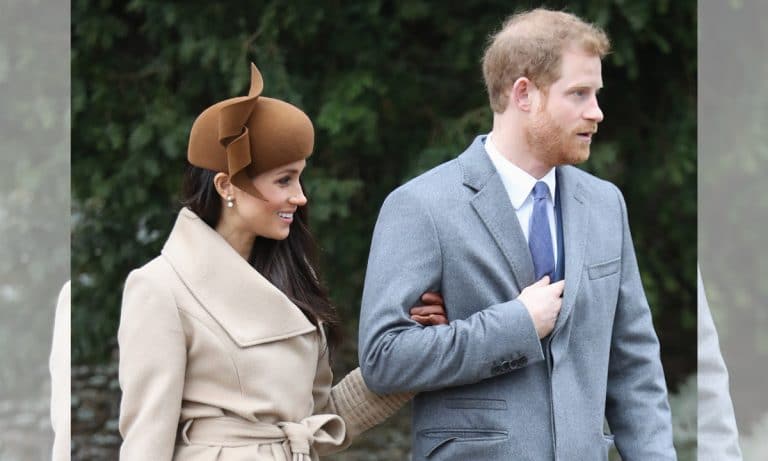
Body Language Expert Explains The Dynamic Between Prince Harry And Meghan Markle

Prince Harry and Meghan Markle’s engagement has aroused as much interest as only the royals can inspire, making them one of the highlights of 2017.

While royal weddings have always been a source of great interest for us, this wedding is even more special due to the fact that Meghan Markle is a divorced biracial American actress. Fairy tales can come true, and the world can change for the better, no matter how many eyebrows are raised in the meantime.

While the royal couple has made a few public appearances, most of them have been monitored closely by professional photographers and experts whose job it is to make sure that you’re watching what you’re supposed to be watching. Still, body language experts believe that all pictures, no matter how monitored they are, reveal the true nature of couples, how they act around each other, their level of comfort, and their dynamic within the relationship.

Cosmopolitan had a talk with Blanca Cobb, a North Carolina based body language professional (yes, this is a thing) and these are some of the most interesting facts they uncovered:

The Roles In Their Relationship 

While the couple’s engagement photos were posed and manipulated by expert photographers who do this sort of thing for a living, the images reveal interesting patterns within the couple’s dynamic. According to Cobb, the fact that Harry sits on a step above Meghan means that he has a more pronounced position in the relationship. The simple gesture of his cheek touching Meghan’s head is also a display of affection and intimacy.

As for Meghan’s positioning on the image, Cobb believes that the placing of her elbow is a classy yet sexy way of claiming territory and suggesting intimacy. We’re all blushing here.

Physical Closeness


A post shared by ABC News (@abcnews) on

While this image is still a part of the same photo shoot, it looks a little more loose and relaxed than the previous photo, allowing for the couple’s personality to shine through. Like with the previous photo, Harry takes the lead here, walking a little ahead of Meghan and concealing some of her body with his. Cobb believes this is a form of protectiveness and of being assertive. Meghan holds his hand and arm, suggesting security, safety, and wanting to be closer to him.

More Natural Poses

This photo is much less posed and professional than the previous ones, and it shows a Harry that’s more comfortable with facing and saluting large crowds, waving at them, and angling his body in their direction. Meghan stays a little behind, smiling comfortably. Cobb also claims the fact that they’re standing so close suggests intimacy and love.

Cannabis Industry Will Create 150,000 Jobs In Cali By 2021

It’s been less than a full week since it’s been legal for adults in California to purchase cannabis for non-medical purposes, but experts are already projecting massive job creation in the state. And California lawmakers are salivating over the new massive new tax revenue stream.

The legalization of adult-use sales in California will lead to the creation of nearly 99,000 cannabis industry jobs in the state by 2021, about a third of all cannabis jobs nationwide, and 146,000 jobs overall when indirect and induced effects are considered, according to a new report released earlier this week. By 2021, direct cannabis industry employment will top 291,500 full-time jobs, with a total employment effect of nearly 414,000 employees across all legal cannabis states.

The upbeat employment data comes from “US Legal Cannabis: Driving $40 Billion Economic Output” report by Arcview Market Research, in partnership with BDS Analytics.

“The economic excitement around the legal cannabis industry is no longer just theory,” said Troy Dayton, CEO of The Arcview Group. “Due to the giant impact adult-use legalization is already having in the United States, it’s vital for key stakeholders to understand the full impact of legalization, beyond just retail sales numbers.”

The 68-page report provides estimates of the total economic contribution, direct and indirect jobs created, and tax receipts generated in each of the 35 states expected to have medical or adult-use legality by 2021.

Among other findings, “US Legal Cannabis: Driving $40 Billion Economic Output” reveals:

  • Six of the early movers in legal adult-use implementation (California, Colorado, Massachusetts, Nevada, Oregon, and Washington) will account for more than 60% of that $39.6 billion in 2021 total economic output. Medical-use states will see far less positive economic impact.
  • The legal cannabis industry may have been a key factor in lowering Colorado’s unemployment rate to one of the lowest in the nation.
  • More than $1 billion in wholesale, excise and cannabis-specific sales taxes were taken into state treasuries during 2016. And that is a conservative estimate.
  • The overall tax figure is forecast to grow to just over $1.4 billion in 2017 and then to nearly $2.8 billion by 2021. With additional state and local general sales taxes, that 2021 figure could be between $4 billion and $4.7 billion.
  • Related Story: Work With Weed: 5 Hottest Jobs In The Red-Hot Marijuana Industry

The report also explores the projected decrease in illicit markets, and the budgetary and societal benefits of that decline, as the legal, regulated side of the cannabis industry continues to grow.

PA Governor: We’re Not Taking Away Guns From Medical Marijuana Users

As federal law continues to prohibit all types of marijuana, and with Attorney General Jeff Sessions rescinding the Obama-era Cole memorandum and launching a crackdown on marijuana, the friction between states with legalized marijuana and the federal government is at an all-time high.

Pennsylvania is among the states to recently join that fray, as the state is putting the finishing touches on its medical marijuana program roll out. Currently, more than 10,0000 citizens are registered to receive a medical marijuana card. Some of those Pennsylvanians, however, are only now starting to learn the federal government bans gun sales to medical marijuana card holders.

The worry caused by such a tension caused Pennsylvania Governor Tom Wolf to clarify the state’s policy on the issue.

“We’re not going to take their guns away,” Wolf told WESA, Pittsburgh’s local NPR station.

Because the Bureau of Alcohol, Tobacco, Firearms and Explosives oversees the sales of firearms, federal law takes precedent. When state residents sign up for a Pennsylvania medical marijuana card, they also join a registry that gun merchants reference before the sale of firearms. Any person legally purchasing a gun must fill out ATF Form 4473, which includes the question:

Are you an unlawful user of, or addicted to, marijuana or any depressant, stimulant, narcotic drug, or any other controlled substance?

The form further clarifies:

The use or possession of marijuana remains unlawful under Federal law regardless of whether it has been legalized or decriminalized for medicinal or recreational purposes in the state where you reside.

“People should not have to make that choice,” Wolf said. He also added, “The federal government needs to do the right thing here.”

Pennsylvania State Police have advised residents that they do not need to get rid of their guns if registering for a medical marijuana card. If seeking clarification about medical marijuana registration and gun ownership, residents should seek out their local attorney.

Only 5 Percent Of People Can Spot The Hidden Cat In This Video

It’s no secret cats rule the world. They will be petted when they want to be petted. They will come when you call them only when they feel like it (or if you have food). And, as this video will attest, they will only be found when they want to.

Because felines are so great at blending in with their environment, only five percent of people who watch this video can spot the cat in less than 30 seconds.

There’s a photo within the video of a dusty, barren field. But it’s not as abandoned as it initially seems. There’s a cat in there. Watch for yourself and see if you’re one of the eagle-eyed few who can see the camouflaged critter. (If you can’t find it, there’s a hint below!)

SPOILER ALERT! Take a hard look at the right side of the photo. You’ll see a cat sitting in front of the rock pile.

Need another eye exam? Rumble has you covered with this letter game.

Don't Miss Your Weekly Dose of The Fresh Toast.

Stay informed with exclusive news briefs delivered directly to your inbox every Friday.

We respect your privacy. Unsubscribe anytime.